



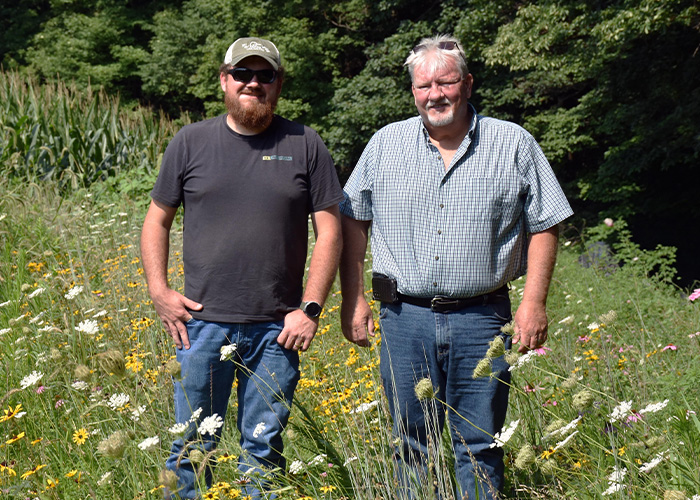
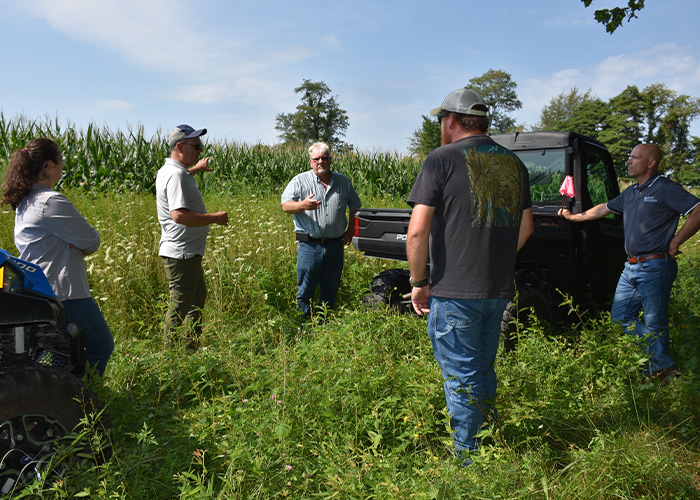
This Friday, meet Tim Wilson of Indiana, where he and his family grow corn and soybeans on more than 2,200 acres in Fountain and Montgomery counties. Over the last five years, the family has dedicated 23 of those acres to wildlife and pollinator habitat, helping improve the biodiversity on their operation while also improving their return on investment.
The Value of CRP
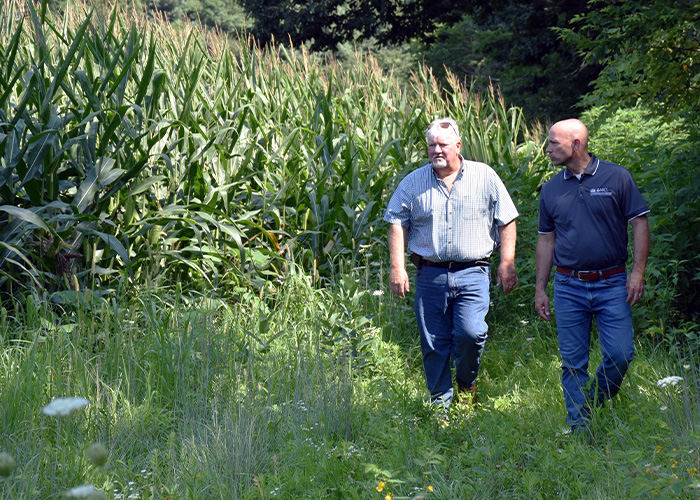
Like many producers across the Midwest, the Wilsons realized farming every acre doesn’t always make sense. The outer edges of their fields shaded by woods, damaged by wildlife, or hampered by poor soils were holding back profitability. Those marginal acres were costing him, not earning.
“The yield loss is so dramatic around these edges,” Tim said. “We needed to figure out a way to make those fields work for us.”
Tim found a solution in the Conservation Reserve Program (CRP), administered by USDA’s Farm Service Agency (FSA). The voluntary conservation program helps producers and landowners generate income from unproductive or marginal cropland while re-establishing valuable land cover to improve water quality, prevent soil erosion, and support wildlife habitat.
USDA’s Natural Resources Conservation Service (NRCS) provides technical expertise, while partners offer additional support with management.
In 2022, the Wilsons enrolled a few acres in prairie strips and pollinator habitat to test the program, and the results were immediate. Encouraged, the family enrolled another 17.5 acres of marginal land in 2025, establishing 30-to-40-foot prairie strips of native grasses and flowers along field edges and wood lines.
“After we put the fields in CRP, our APH went up on our farms, and that’s going to be beneficial to our return on investment,” he said, referring to his Actual Production History (APH) yields that determine crop insurance guarantees.
Beyond the Economics
The impact of CRP is clear. By removing unproductive acres, Tim’s average yields have risen, insurance coverage improved, and profitability strengthened. Fields that once averaged 180 bushels of corn are now producing 200 to 210, simply because the weakest ground is out of production. By taking acres out of production, he not only receives annual CRP payments but also sees better yields and stronger returns on the acres he continues to farm.
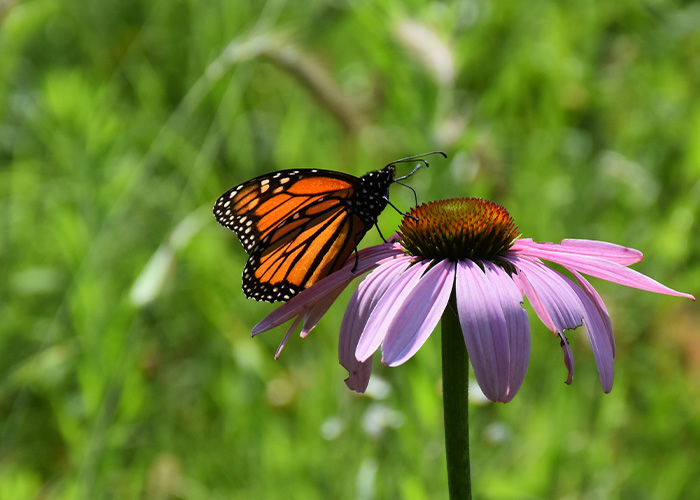
In addition to the financial benefit of the program, the Wilsons have rediscovered a connection to the land’s natural heritage. Wildlife has returned in abundance—quail, wild turkeys, deer, bobcats, coyotes, and foxes. Their fields are alive with Black-eyed Susans, purple coneflowers, bees, and butterflies.
“The conservation side of me likes it because quail and other wildlife love the prairie strips,” said Drew Wilson, Tim’s son. “I like knowing that the wildlife and the butterflies are getting use out of the land, [and] at the same time it’s helping us.”
The Wilsons credit FSA, NRCS, and Pheasants Forever and Quail Forever in Indiana for helping them navigate the process.
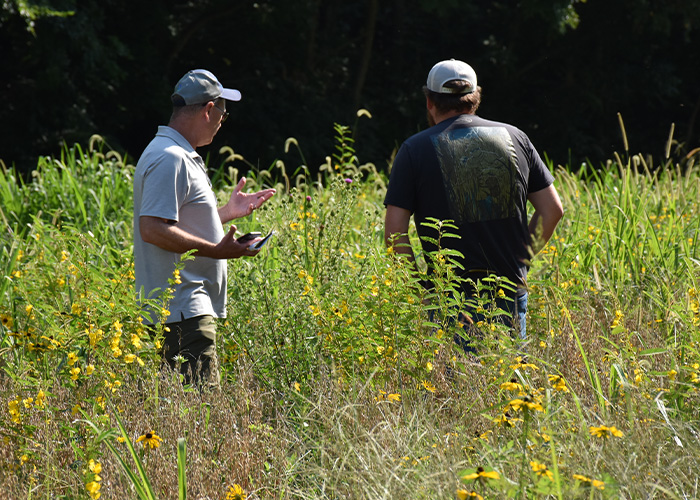
“I go up to the [USDA] office and sit down with them, and they work with me on my goals,” Tim said. “All in all, the group we worked with, in my book, they get an A+.”
Looking ahead, Tim hopes CRP helps keep farming viable for the next generation.
“We’re going to improve it to the maximum that we can for our grandkids and their grandkids. The vehicles that are going to help us are the programs USDA offers. I would tell anybody now, after we’ve been doing it for some time, that they really need to look into getting into one of the programs like CRP.”
FSA is accepting offers for General CRP March 9 through April 17, 2026. Interested producers should apply with FSA at their local USDA Service Center.
More Information
Visit local farms, ranches, forests, and resource areas through our Fridays on the Farm stories. Meet farmers, producers, and landowners who are working to improve their operations with USDA programs.
USDA offers a variety of risk management, disaster assistance, loan, and conservation programs to help producers weather ups and downs in the market, recover from natural disasters, and invest in improvements to their operations. Learn about additional programs.
For more information about USDA programs and services, contact your local USDA service center.
 Loans and Grants
 Disaster Planning and Assistance
 Conservation
 Ag Business
 Farm Life