



This Friday, meet Rebecca Kutzer-Rice and Mark Ginsberg of Moonshot Farm, a flower farm in Mercer County, New Jersey. On just under 10 acres, the farm grows over 150 varieties of flowers and serves both local markets and nearby cities like New York and Philadelphia. This operation is blooming in more ways than one, making impressive strides in sustainability and agricultural innovation.
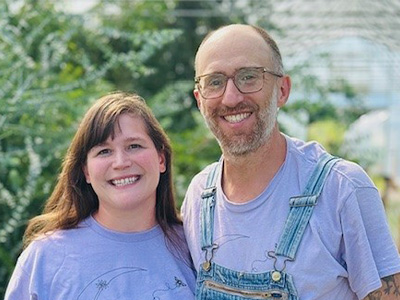
“Flowers feed the soul,” says Rebecca. “There’s a real hunger for local flowers, and I love providing that to our community.”
Since launching in 2019, business has been thriving, with sales doubling every year. Moonshot is also a popular spot for community events, including U-pick flower days, flower arranging classes, and holiday wreath-making workshops.
A Blooming Partnership with NRCS
Their partnership with USDA’s Natural Resources Conservation Service (NRCS) has been crucial in supporting Rebecca and Mark’s innovative and sustainability goals. With NRCS’ Regional Conservation Partnership Program (RCPP), Rebecca and Mark are working to improve sustainability and reduce costs. RCPP is a partner-driven approach to conservation that funds solutions to natural resource challenges on agricultural land.
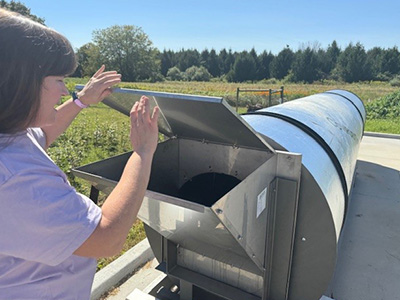
Their newest project through RCPP is a composting system that will revolutionize how the farm handles waste. The system allows Moonshot to recycle potting and organic materials to reduce its reliance on expensive potting soil. The system heats compost to 140°F for three days to kill pests and pathogens, making it safe to reuse in future plantings. This system could cut their annual potting soil costs by up to $30,000 as well as reduce waste.
Beyond the financial savings, the composting system aligns with the farm’s broader sustainability goals. It helps eliminate the use of peat-based products and will eventually allow the farm to source local leaves for additional composting material.
Growing with Innovation
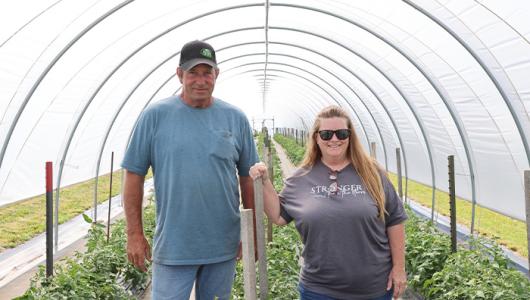
Additionally, the farm installed five high tunnels with assistance from NRCS’ Environmental Quality Incentives Program (EQIP) program. These tunnels allow the farm to grow flowers year-round, extending their growing season and increasing production.
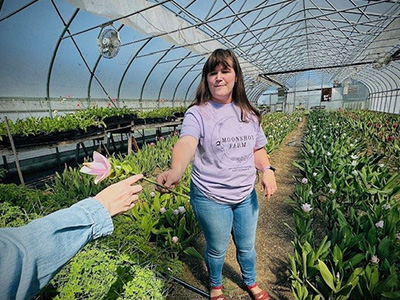
Through EQIP, NRCS works one-on-one with producers to develop a conservation plan that outlines conservation practices and activities to help solve on-farm resource issues. Producers implement practices and activities in their conservation plan that can lead to cleaner water, healthier soil, and more resilient wildlife habitat, all while improving their agricultural operations.
Moonshot Farm is also one of the first commercial geothermal greenhouses for cut flowers. Thanks to a USDA Rural Energy for America Program (REAP) grant, the greenhouse now uses geothermal heating, drastically reducing energy costs.
“USDA [has] enabled our farm to build critical infrastructure while enhancing our sustainability,” says Rebecca. “Through these programs, multiple jobs have been created in our community.”
Looking Ahead
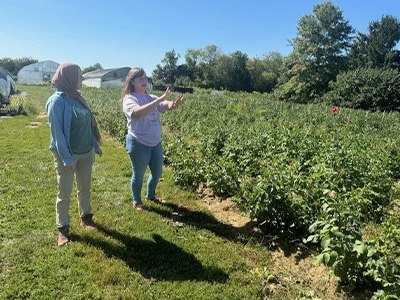
Rebecca and Mark are also passionate about sharing their knowledge with others. They are focused on research and education, hosting farmer-to-farmer tours, and participating in industry podcasts. The future is bright for Moonshot Farm, with plans to continue expanding its sustainable practices. Rebecca and Mark hope to grow their composting system, install a new well, add more high tunnels, and potentially acquire more land to keep up with demand.
Through innovation, collaboration, and a commitment to sustainability, Moonshot Farm is not only growing beautiful flowers but also setting a powerful example for other farmers. Their success highlights how programs and partnerships can fuel agricultural innovation and create a lasting positive impact on the local community and beyond.

More Information
Visit local farms, ranches, forests, and resource areas through our Fridays on the Farm stories. Meet farmers, producers, and landowners who are working to improve their operations with USDA programs.
USDA offers a variety of risk management, disaster assistance, loan, and conservation programs to help producers weather ups and downs in the market, recover from natural disasters, and invest in improvements to their operations. Learn about additional programs.
For more information about USDA programs and services, contact your local USDA service center.
 Loans and Grants
 Disaster Planning and Assistance
 Conservation
 Ag Business
 Farm Life