



Every Day, and especially on National Ag Day, we recognize the farmers, ranchers, and landowners who keep this country running. They put in long hours, take on real risk, and produce the food, fiber, and fuel that Americans rely on. As we look ahead to our nation’s 250th anniversary, it’s a good time to reflect on the strength of American agriculture and the people behind it.
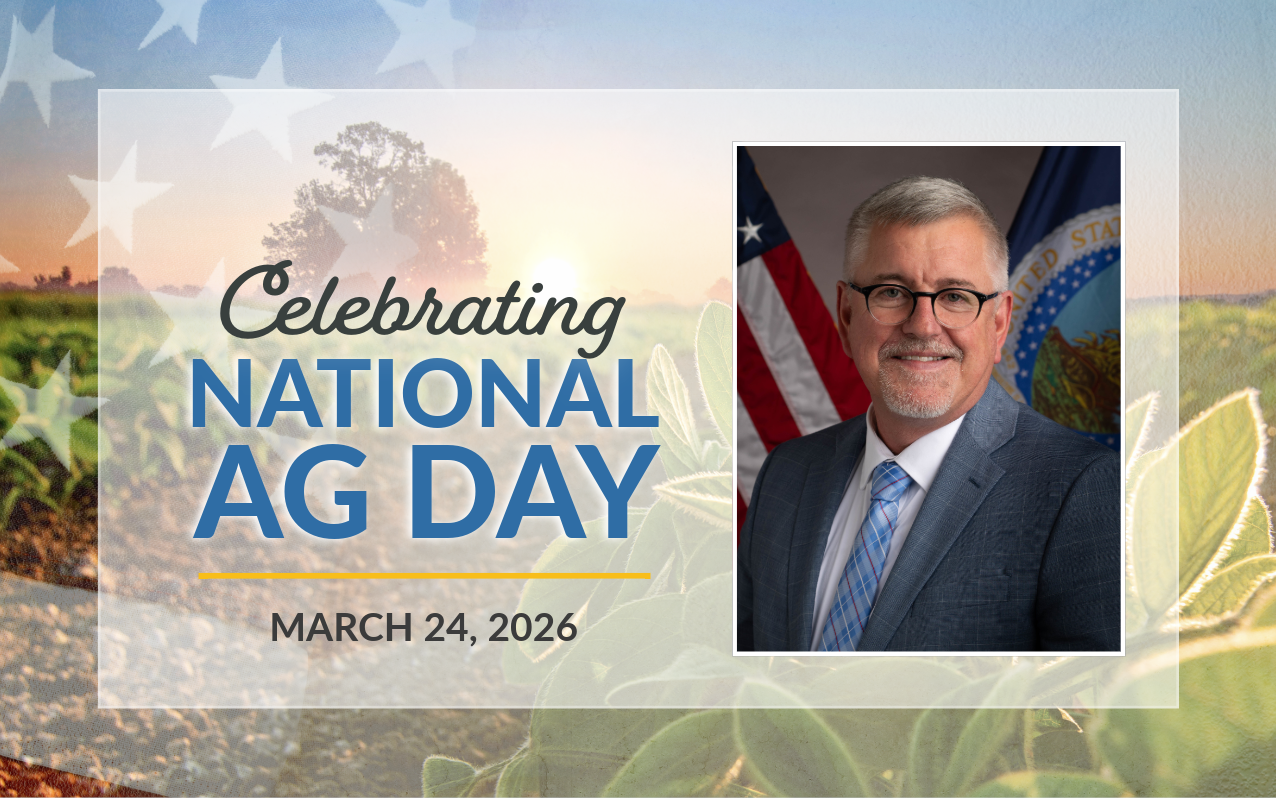
At USDA, and across the Farm Production and Conservation (FPAC) mission area, our focus is on supporting those producers in practical ways – helping them start, grow, protect, and sustain their operations. Whether it’s managing risk, accessing credit, our job is to make sure the tools are there and that they work on the ground.
Expansion, Protection and Recovery
USDA’s Farm Service Agency (FSA) helps farmers, ranchers, and forest landowners expand and improve their operations with financing options and get back on their feet in times of economic volatility or following natural disaster events.
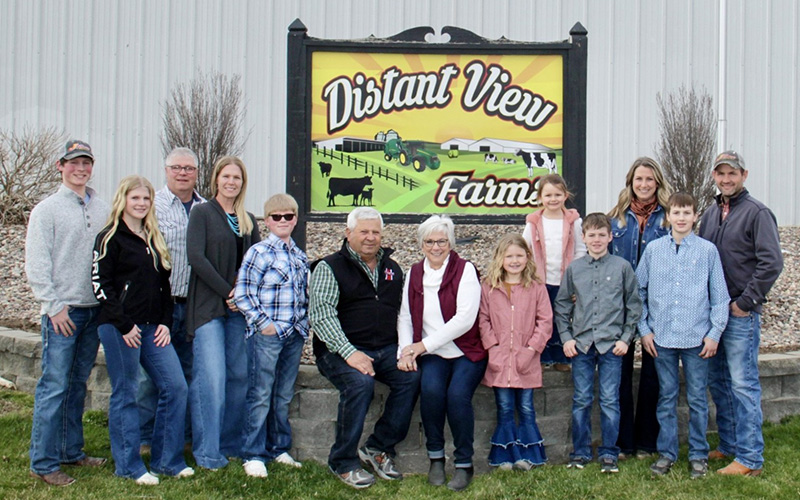
Ann Deering of Allamakee County, Iowa, works with her family to run their diversified operation, Distant View Farms. Originally a dairy, the farm has evolved over the past 50 years to also operate a feedlot, manage a beef herd, and raise all their own feed – including corn, soybeans, and alfalfa.
The farm participates in FSA’s Dairy Margin Coverage Program to protect against declines in milk prices and increases in feed costs. To add an additional safety net, the farm also enrolls in the Agriculture Risk Coverage and Price Loss Coverage programs, which provide income support to farmers impacted by substantial drops in crop prices or revenues.
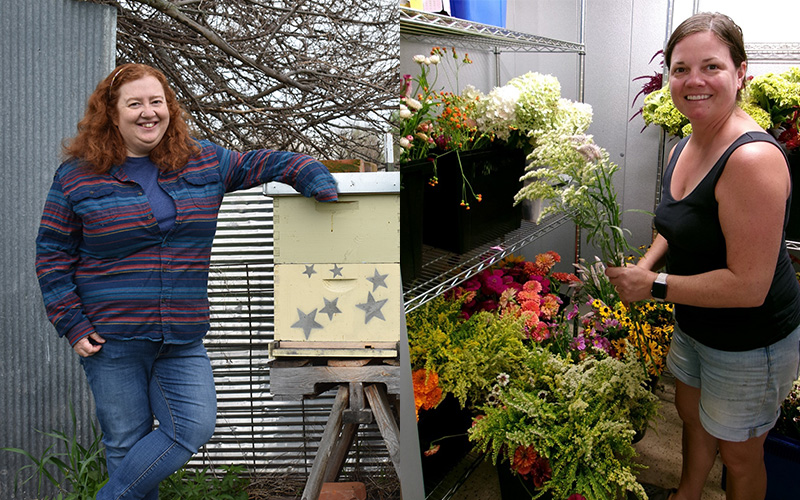
In Philadelphia, Pennsylvania, Courtney Jewell established Jewells in Bloom in 2022, growing her business from a small Community Supported Agriculture project to a flourishing vegetable and flower farm.
As demand increased, finding an appropriate space to store her cut flowers became a top priority. Courtney found her solution in FSA’s Farm Storage Facility Loan Program. “With the cooler, I have plenty of space to grow and a better footing to be successful,” she said.
To protect her growing operation, Courtney said enrolling in FSA’s Noninsured Crop Disaster Assistance Program has been vital to her operation as her area experiences extreme weather throughout the year, including heavy rains, high winds, intense heat, and drought.
Kirstin Bailey and her family own and operate Fox Run Farms in Brainard, Nebraska, a specialty crop operation with an orchard and a vineyard. After searching for ways to improve productivity, Kirsten decided to become a beekeeper, utilizing FSA’s microloan program to help with the expansion.
Kirstin notes the viability of her beekeeping business is due in part to the assistance she’s received from FSA over the years. Harsh Nebraska winters can take a toll on the overwintering of bees. To aid in her recovery, Kirstin has used the Emergency Assistance for Livestock, Honeybees and Farm-Raised Fish Program, one of FSA’s disaster assistance programs.
Enhancing with Conservation
Through voluntary conservation programs, the USDA Natural Resources Conservation Service (NRCS) helps producers, soil and water conservation districts, and other partners protect and conserve natural resources on private lands throughout the United States.
In Hill County, Texas, Sawyer Farms has been in the Sawyer family for nearly 100 years. John Sawyer, the fourth generation to operate the farm, has worked with NRCS since he started farming on his own in the early 1980s.
“My son has been working with me for the last two years, so we’re hoping to soon call it a fifth-generation farm,” he said.
To maintain their 3,000 acres of soil in a region that fluctuates between dry and wet conditions, NRCS programs, such as the Environmental Quality Incentives Program, have helped the Sawyers to implement numerous conservation practices over the years, including cover crops, building grass waterways, structures, ponds, and terraces. “We’ve done everything except plant grass,” said John.
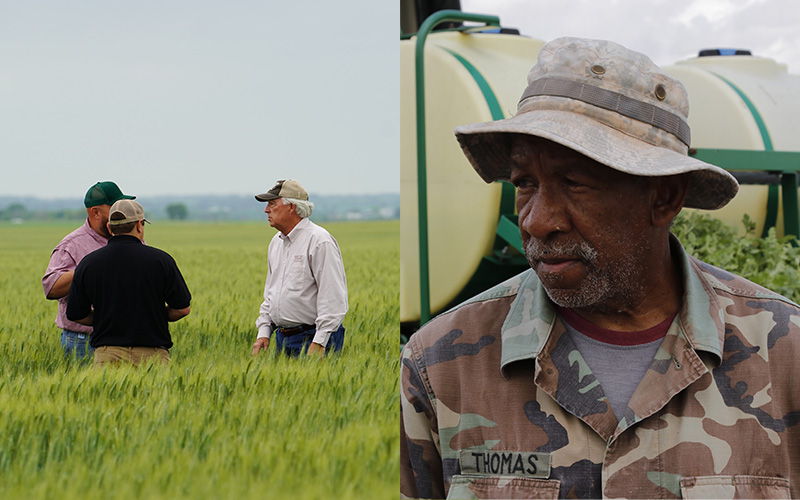
Burthel Thomas of Pine Bluff, Arkansas, found a steadfast partner in NRCS to help him grow responsibly, sustainably, and with a long-term vision.
Like John, Burthel applied several conservation practices on his farm, including cover crops, nutrient management, integrated pest management, irrigation water management, reduced tillage, crop rotation, deep tillage, and crop residue.
“The NRCS didn’t just show up once; they’re partners,” said Burthel. “They’ve been there, step by step, helping me improve the soil, conserve water, and grow smarter.”
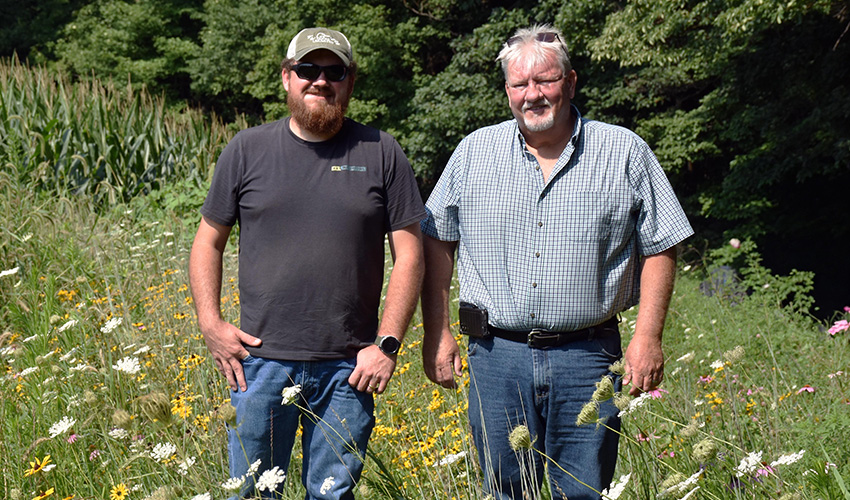
NRCS staff also provides technical assistance to producers enrolled in FSA’s Conservation Reserve Program (CRP), another voluntary conservation program. In Indiana, Tim Wilson and his family grow corn and soybeans on more than 2,200 acres in Fountain and Montgomery counties. They have 23 acres enrolled in CRP, helping to simultaneously improve the farm’s biodiversity while also improving their return on investment.
Fields that once averaged 180 bushels of corn are now producing 200 to 210 simply because the weakest ground is out of production. “I like knowing that the wildlife and the butterflies are getting use out of the land, [and] at the same time it’s helping us,” said Drew Wilson, Tim’s son.
Managing Risk to Continue Farming
The USDA Risk Management Agency (RMA) provides innovative crop insurance products to America’s farmers and ranchers through effective, market-based risk management tools to strengthen the economic stability of agricultural producers and rural communities.
In Lafayette Parish, Louisiana, fifth-generation farmer Eddie Drew Lewis III works alongside his brothers to farm more than 2,000 acres of sugarcane.
In the past six years alone, two deep freezes and a generational drought have destroyed most, if not all, of their crops. In each instance, the Lewis brothers relied on their sugarcane crop insurance policy to fill in the gaps and continue farming.
According to Eddie, without Federal crop insurance, those losses would have caused the Lewis family to lose their farm. “Insurance is the number one thing that you want to have on the farm,” Eddie said. “That's the first and foremost thing.”
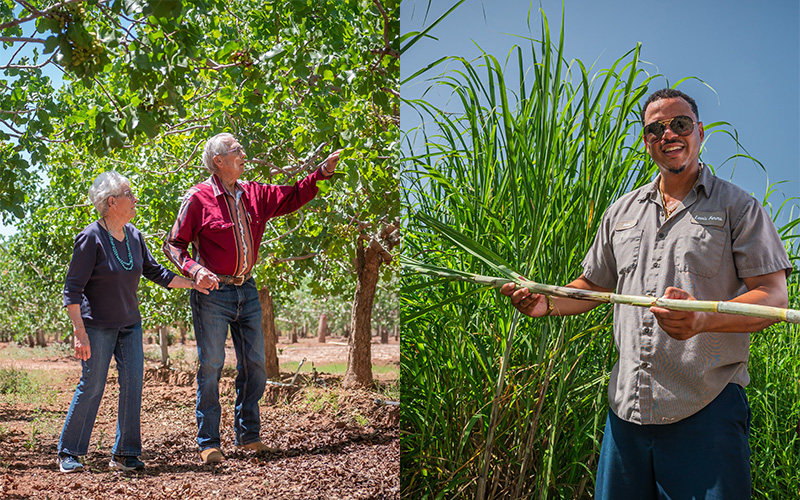
George and Marianne Schweers are owners and operators of Heart of the Desert in Alamogordo, New Mexico, where they grow, process, and market farm-grown pistachios, along with wine, oil, and more.
With over 50 years in the business, one of the many entrepreneurial choices Schweers made was to purchase Pistachio Crop Insurance coverage.
“Farm and weather are inseparable, so [crop insurance] gives us protection from any event,” Marianne explains. “You really have to plan strategically how you spend your money. If you're dependent on a crop, whatever it is you're growing, then you need to hedge your bets, and for what you get from having crop insurance, even if you don't cover your losses, it gives you the start to be able to keep going.”
Continuing to Grow Together
Over the past 250 years, American agriculture has continued to adapt, improve, and move forward, and the same must be true for the work we do across FPAC. Our focus is simple: make sure our programs work better for the producers we serve, not just on paper, but out in the field.
We’ve made progress in recent signups by streamlining applications and payments, including providing pre-filled applications to eligible producers. Tools like Login.gov are helping producers apply, certify, and track their applications more easily, saving time and cutting down on unnecessary steps.
We’re also continuing to move forward with the “One Farmer, One File” effort. The goal is to create a single, streamlined record across USDA so producers don’t have to repeat the same information in multiple places. It’s about reducing duplication, improving efficiency, and making it easier to work with USDA – so producers can spend less time in the office and more time doing the work that matters.
American agriculture has always been built on resilience, innovation, and a willingness to adapt. As we recognize that legacy, we’re also looking ahead – focused on strengthening the next generation of producers and ensuring USDA is ready to support them. I look forward to continuing this work together and to the next 250 years of American agriculture.
More Information
For more information about USDA programs and services, contact your local USDA service center. Additionally, producers can learn more about crop insurance and the modern farm safety net at rma.usda.gov.
 Loans and Grants
 Disaster Planning and Assistance
 Conservation
 Ag Business
 Farm Life