



This Friday, meet John and Natasha Sawyer of Hill County, Texas, where the farm has been in the Sawyer family for nearly 100 years. These fourth-generation farmers have embraced a new era of agriculture. Transitioning from conventional methods to sustainable practices, they’ve adapted to the evolving landscape. Today, their fields flourish with corn, soft wheat, barley, and rye.
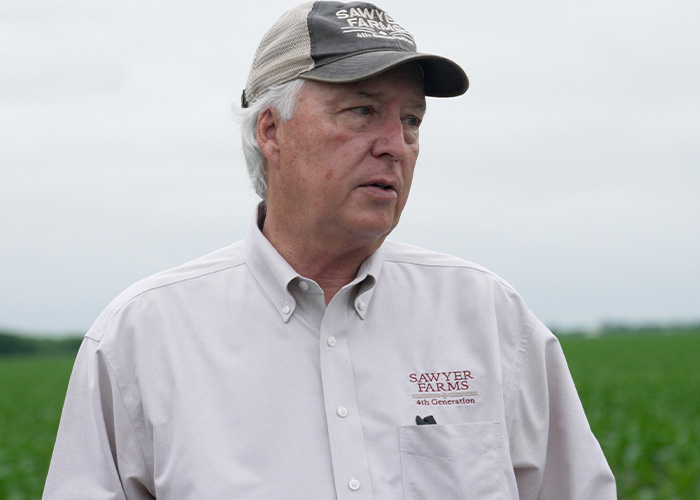
“I’m the fourth generation to operate the farm,” John said. “My great-grandparents, grandparents, and parents have all worked this land. Now it’s my wife and me. My son has been working with me for the last two years, so we’re hoping to soon call it a fifth-generation farm.”
Preparing the Next Generation
John and Natasha are partners when it comes to work on the farm. Natasha, who was in banking when they met, continues to manage a business outside the farm part-time and handles the farm’s bookkeeping and taxes.
“There’s lots of paperwork, and we have to keep each other in line,” John said.
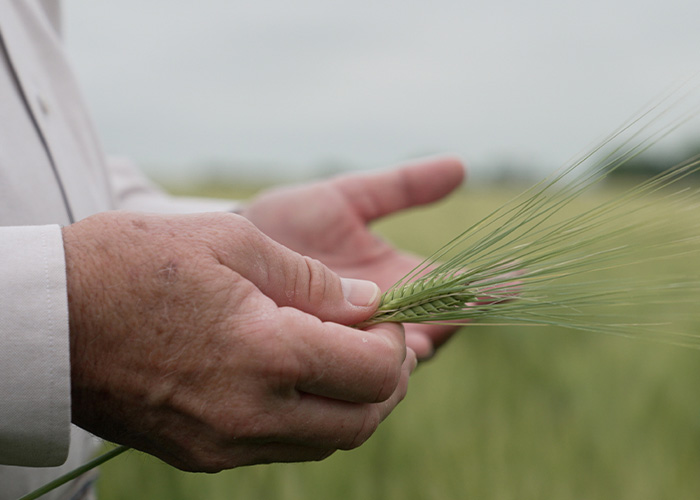
Their son, Walker, has followed a similar path to his father, attending college and working away from home before returning to the farm. It’s an approach John learned from his father.
“My dad told me to go get a job where you call somebody else ‘boss,’ not just ‘dad,’” John said. “So, I told my son and daughter the same thing.”
Walker is now back and learning the ropes of the family business, while their daughter, Alison, who prefers her current career off the farm, still finds time to manage Sawyer Farm’s social media presence and promotional gear.
Modernizing the Operation
To maintain their 3,000 acres of soil in a region that fluctuates between dry and wet conditions, they’ve been working with USDA’s Natural Resources Conservation Service (NRCS) to implement sustainable conservation practices, like cover crops. They’re also exploring other available programs to fit their changing needs and goals.
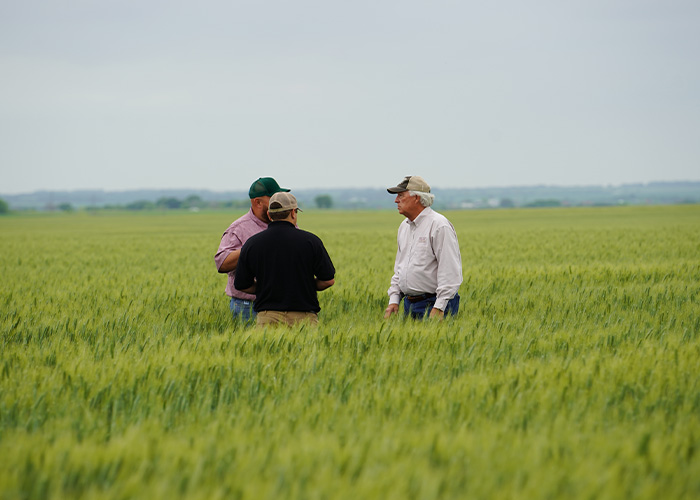
“Cotton was king in the county back in the ’50s,” John said. Now, though, they’ve transitioned from cotton to grains and then to corn, maintaining small grains in rotation. Over the past decade, they’ve developed a relationship with a local whiskey distillery in Fort Worth.
“We’ve become a lot more focused on identity preservation and the quality of our grains, becoming customer-oriented to deliver a product they like and that wins awards for their whiskey,” said John. “We are proud of our relationship and partnership with them. When they won their first gold medal for bourbon that we had put everything in the bottle for them. I was pretty proud we could produce a quality product that was doing what they needed it to do.”
A Lifelong NRCS Partnership
John has been working with NRCS since he started farming on his own in the early 1980s. His father instilled in him the importance of conservation. “My dad was one of the original board members for the Hill County-Blackland Soil and Water Conservation District Board in the ’60s and ’70s,” he said.
John recalls attending board meetings growing up. After his dad passed in 1999, he joined the committee in 2000, serving as chairman at one point, and leaving in 2018.
With the Environmental Quality Incentives Program and Conservation Technical Assistance, he has implemented numerous NRCS practices over the years, including building grass waterways, structures, ponds, and terraces. “We’ve done everything there is except plant grass,” John said.
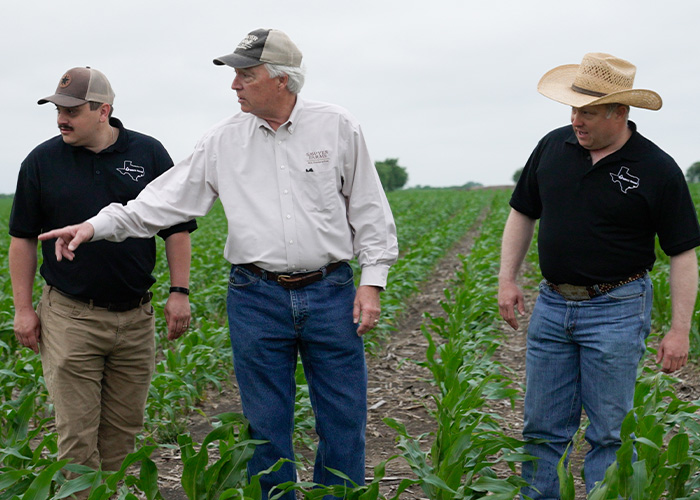
More recently, when their local whiskey partner requested a more sustainable product, the Sawyers turned to NRCS for guidance to help them transition to cover crops and reduced tillage to provide the sustainable product their consumer wanted.
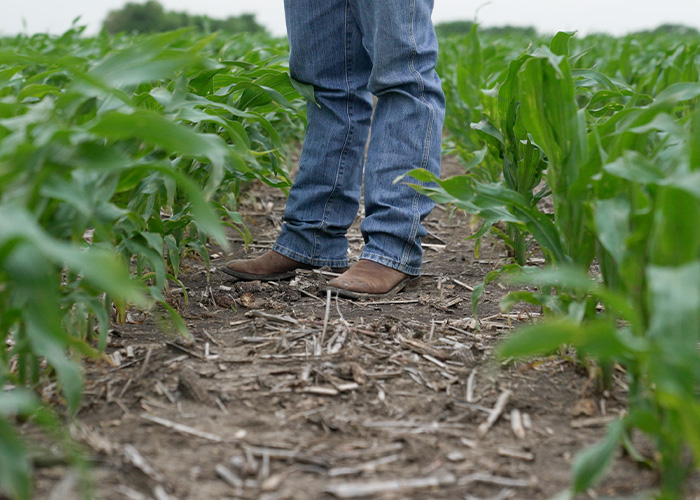
While cover cropping and reduced tillage are relatively new practices at Sawyer Farms, they’ve implemented various sustainable practices for years, including grassed waterways, terraces, pasture planting, technical assistance with pest management, nutrient management, and grade structure. These practices help protect the soil from erosion, retain organic matter, and promote soil and microbial health.
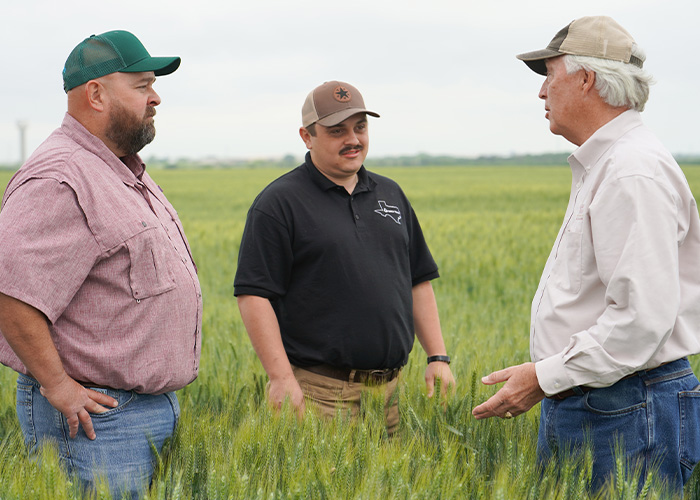
To produce the best crops possible, Sawyer is collaborating with NRCS to ensure his soil is up to the task. Practices such as cover cropping, reduced tillage, and no-till are helping Sawyer Farms adopt more sustainable practices.
Sawyer Farms, with its rich history and commitment to sustainable farming practices, exemplifies the balance between tradition and innovation, ensuring a prosperous future for the Sawyer family and their land.
Through this, John intends to keep NRCS as expert guides along the way. “We continue to work with NRCS and improve the condition of our soil, hoping to expand the farm and keep it thriving for future generations.”
More Information
Visit local farms, ranches, forests, and resource areas through our Fridays on the Farm stories. Meet farmers, producers and landowners who are working to improve their operations with USDA programs.
USDA offers a variety of risk management, disaster assistance, loan, and conservation programs to help producers weather ups and downs in the market and recover from natural disasters as well as invest in improvements to their operations. Learn about additional programs.
For more information about USDA programs and services, contact your local USDA service center.
 Loans and Grants
 Disaster Planning and Assistance
 Conservation
 Ag Business
 Farm Life