



This Friday, meet Matt and Rachel Stine, owners of Oak Hill Tree Farm. Nestled into a quiet corner of Crawfordsville, Indiana, this family farm is where holiday dreams come true – from pumpkin patch photoshoots to cutting down the Christmas trees, the Stine’s farm has it all.
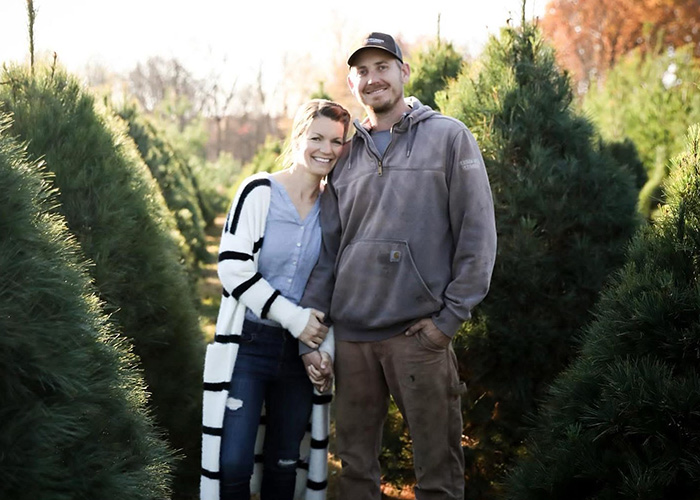
Rachel and Matt dove head-first into farming in 2009 with approximately 40 head of beef cattle. Matt, while working as a financial and crop consultant, learned about USDA programs from some of his customers.
Getting Started with USDA
Needing some fence for their cattle, the Stines reached out to the USDA Natural Resources Conservation Service (NRCS) to apply for assistance through the Environmental Quality Incentives Program (EQIP) to make their grazing easier.
“Matt introduced me to the EQIP program and that’s how we got our start,” said Rachel.
After working cattle for several years, the Stines decided to live out a longtime dream of owning a Christmas tree farm. “It’s all been a giant experiment,” Rachel said.
In 2018, the Stines ventured out to purchase a piece of land across the road from Matt’s grandparents’ farm, an appealing property for Christmas trees due to its sandy soil contents – the ideal soil construct for growing healthy, prosperous Christmas trees. Because of fluctuations in the real estate market and the high cost of purchasing such a large parcel of land, conventional financing seemed almost impossible. That’s where USDA’s Farm Service Agency (FSA) comes in.
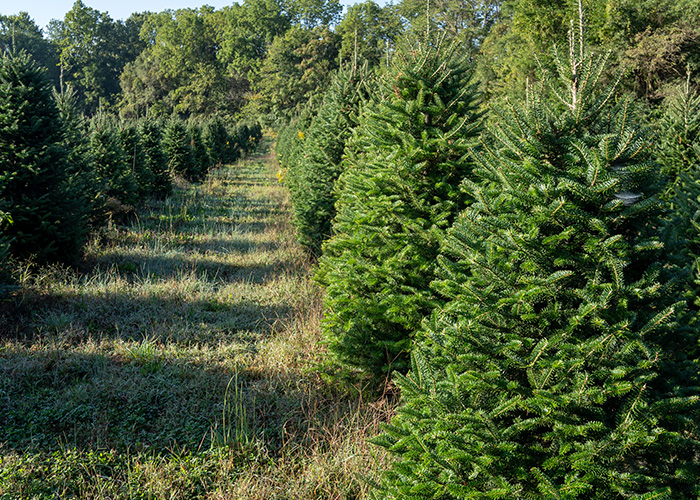
FSA’s farm ownership loans offer up to 100% financing and are a valuable resource to help farmers and ranchers purchase improve, maintain and expand agricultural operations, increase productivity, and assist with land tenure to save farmland for future generations.
“To be frank, we would not have been able to purchase farmland if it weren’t for FSA loans. The lower interest rates have helped us tremendously,” said Rachel. “Because of the lower payments, we can use our extra cash to improve the land and make it work for us.”
Expanding the Operation
After purchasing the land in 2018, the Stines got to work building their Christmas tree farm. They planted 16 acres of Canaan Fir and pine trees in the sandiest soil on the property and started the five-to-ten year wait for them to grow into full-fledged Christmas trees. To help supplement the farm’s income during the long waiting period before Christmas trees are ready, the Stines pivoted to agrotourism, an opportunity for farm visitors to gain a better understanding of the agricultural practices used in the their operation.
“We started to grow pumpkins and dabbled in some agrotourism,” said Rachel. “Field trips are our biggest passion on this farm in the fall. The kids come out, and they’ve never seen [a farm] before.”
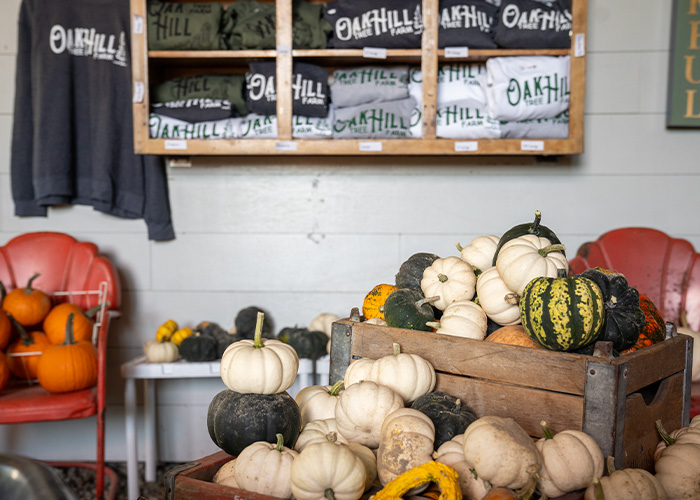
In addition to the pumpkin patch and the Christmas tree farm, the Stines also operate MRS Farm, their grain operation. To purchase the grain farm in 2022, the Stines turned to FSA’s low-interest ownership loans once more.
“None of this would exist if we would have had to use just our equity to buy the ground,” explained Matt. “The FSA loans were the only way we could have been approved.”
Additionally, the Stines protect their corn and soybeans with crop insurance, overseen by USDA’s Risk Management Agency (RMA). Crop insurance is a risk management strategy that farmers use to protect their livelihoods. Approved Insurance Providers sell and service Federal crop insurance policies through a public-private partnership with RMA. By purchasing a policy through a crop insurance agent, farmers are financially protected if they have eligible losses.
Growing Holiday Cheer
The Stines are always looking to expand their agrotourism capabilities. Hoping to clear a forested area of the property, Matt and Rachel again turned to NRCS’ EQIP program to help remove invasive honeysuckles and open wider areas for walking trails and more playground equipment.
“Being able to clear out the invasive honeysuckle will give us a great boost just to be able to use this property more fully,” Rachel explained. “We’ve been able to add some play structures, and it’s just nice to see [the honeysuckle] gone.”
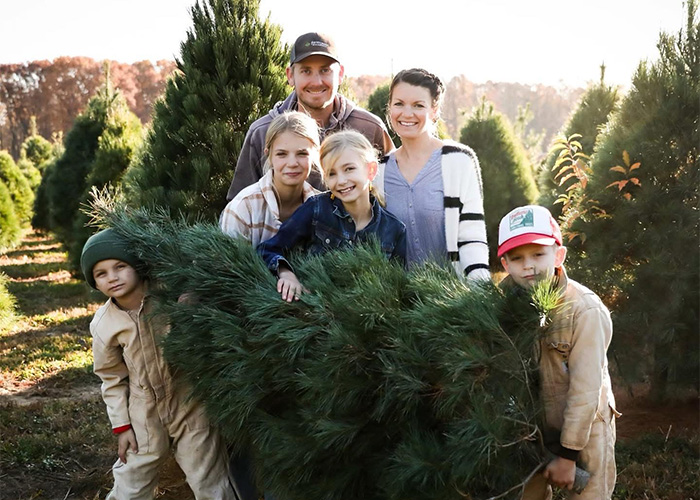
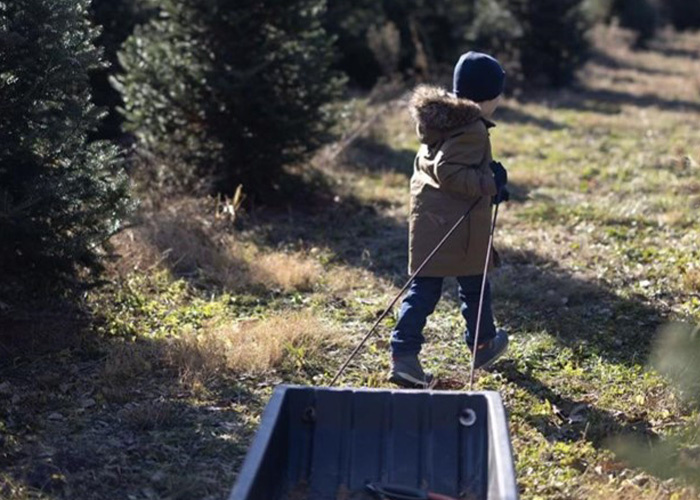
In 2023, the first of the originally planted Christmas trees were ready to cut. As a U-Cut farm, families flood the tree plot to find their perfect tree, cut it down themselves (or have a member of the staff cut it for them) and haul it home for decoration. Customers get to enjoy a hot chocolate bar, wagon rides and wreath making classes as their tree is loaded on top of their car.
The Stine family is rocketing through another season of holiday cheer, with plans in tow to continue growing Christmas trees, pumpkins and family fun. With USDA programs, a farming dream can become a reality.
More Information
Visit local farms, ranches, forests, and resource areas through our Fridays on the Farm stories. Meet farmers, producers, and landowners who are working to improve their operations with USDA programs.
USDA offers a variety of risk management, disaster assistance, loan, and conservation programs to help producers weather ups and downs in the market, recover from natural disasters, and invest in improvements to their operations. Learn about additional programs.
For more information about USDA programs and services, contact your local USDA service center.
Carly Hamilton is a public affairs specialist for NRCS in Indiana.
 Loans and Grants
 Disaster Planning and Assistance
 Conservation
 Ag Business
 Farm Life