


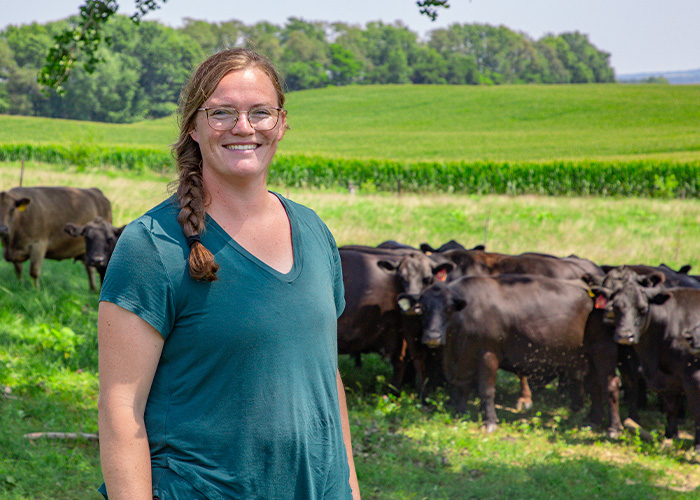
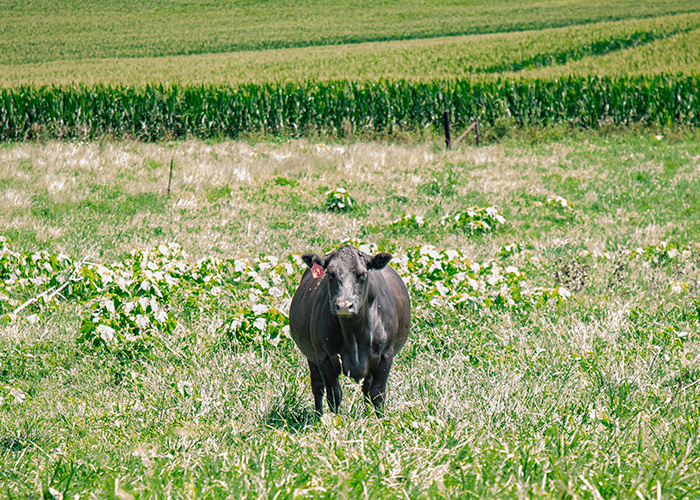
This Friday meet Nicole Vernon of Jones County, Iowa, where she raises cattle, corn, soybeans, and hay. Nicole started her farm in 2016, purchasing 100 acres just before her senior year at Iowa State University. Nicole moved to the farm soon after purchasing the land, splitting her time between classes and the field. Now, 10 years later, Nicole and her husband, Jon, farm alongside her parents where their cows rotate through pastures, cover crops and feed.
Raised on Conservation
Conservation is almost second nature to Nicole. Raised on her family’s farm, Nicole credits her parents, Jeff and Shielly, with instilling her conservation ethic and the value of implementing conservation practices, like no-till, celebrating earthworms as “God’s natural plow,” and learning pasture management.
“It’s how she grew up, riding in the combine and helping with crops,” said Jeff. “We never did tillage and she was always curious about the soil and why it was important.”
In 2025, she was named the Iowa Conservation Woman of the Year by the Iowa Conservation Partnership, an award honoring women who advance conservation in meaningful ways.
Cover Crops and Cattle
She started her farming journey with a beginning farmer loan from USDA’s Farm Service Agency (FSA) to help her purchase the land. Since then, she’s also used FSA’s operating loans to purchase equipment.
At the advice of her father, she also reached out to USDA’s Natural Resources Conservation Service (NRCS) to apply for her first Conservation Stewardship Program (CSP) contract in 2018. CSP encourages the adoption of new technologies and management techniques and provides many benefits, including increased crop productivity, decreased inputs, wildlife habitat improvements and increased resilience to weather extremes.
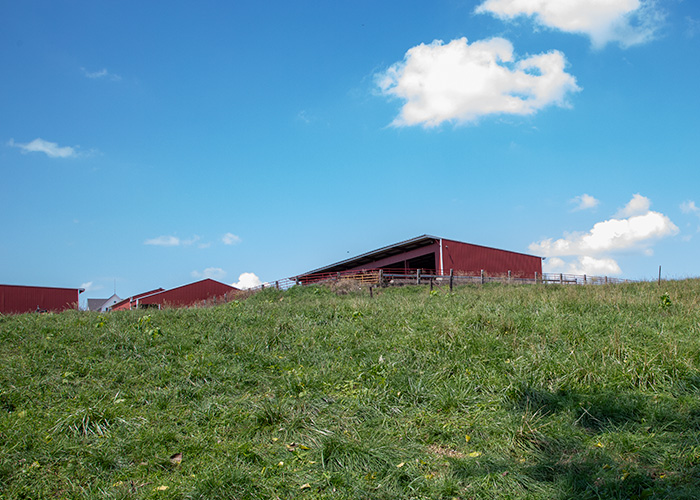
“They understand farming is not one size fits all,” Nicole said. “We are a family-owned working farm, it’s still Mom and Dad’s bread and butter. I’m slowly working my way in so when I have my ideas or dad has his sometimes, we battle it out about what is going to happen, but we know [NRCS] will help us navigate what is best for our operation.”
The hilly acreage Nicole bought was tilled for many years and had gullies and runoff problems. She started practicing no-till farming on her land with financial assistance through her CSP contract. It also included pollinator planting and forest stand improvement.
Nicole implements cover crops and rotational grazing, adopting innovative practices to improve soil and water. “We seed rye into our row crops after chopping silage, which helps with ground cover and provides grazing for our cows in the fall and spring,” she said.
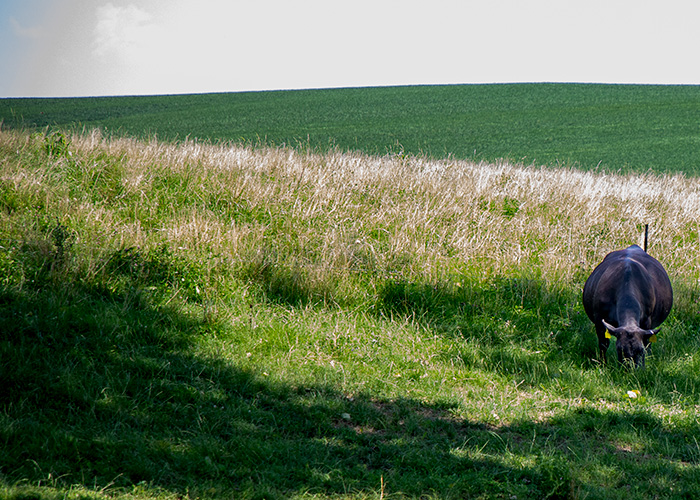
Oats and cowpeas are drilled each year, and radishes are added to help break up compaction. “Last year the cows grazed everything, then came back and ate the radishes. The goats help clean up everything else,” she added.
The Vernons also have about 20 goats, which help with brush management by grazing the plants the cows don’t want. In 2025, the Environmental Quality Incentives Program (EQIP) helped with funding for brush management with the goats.
“I am so proud of everything she has accomplished and look forward to seeing what she does next,” said Jeff. “I know our land is in good hands.”
In addition to the assistance Nicole received from NRCS and FSA, she has protected her operation over the years by leveraging Federal crop insurance programs for her crops and cattle.
Federal crop insurance is managed by USDA’s Risk Management Agency (RMA). RMA serves America’s agricultural producers through effective, market-based risk management tools to strengthen the economic stability of agricultural producers and rural communities. Approved Insurance Providers sell and service Federal crop insurance policies in every state and in Puerto Rico through a public-private partnership with RMA. Through the RMA Agent Locator, RMA provides insurance agent and provider information to customers in all 50 states.
Sharing the Passion
Nicole currently serves her fellow farmers and ranchers as a member of the Jones County FSA County Committee. FSA county committee members are elected by their peers to serve as a direct link between the agricultural community and USDA. Producers on the committee help deliver FSA farm programs at the local level, and work to make federal farm programs serve the needs of local producers.
Additionally, Nicole is an active volunteer with the Jones County Beef Producers, a former representative for Jones County on the Southeast Iowa Agricultural Research Association Board and serves on her church council.
Nicole said each of these roles have added depth to her connection with both agriculture and her community. It allows her to give back and help support adding conservation to the future of farming in her area.
“We are borrowing the land from our kids and our grandkids,” said Nicole. “If I can make sure the land is healthy for my kids, that’s a huge gift.”
More Information
Visit local farms, ranches, forests, and resource areas through our Fridays on the Farm stories. Meet farmers, producers, and landowners who are working to improve their operations with USDA programs.
USDA offers a variety of risk management, disaster assistance, loan, and conservation programs to help producers weather ups and downs in the market, recover from natural disasters, and invest in improvements to their operations. Learn about additional programs.
For more information about USDA programs and services, contact your local USDA service center.
 Loans and Grants
 Disaster Planning and Assistance
 Conservation
 Ag Business
 Farm Life