



This Friday meet Carlos Alberto Pérez Pérez, an agronomist and third-generation dairy farmer in Hatillo, Puerto Rico. His farm, Hato Don Benja, is named in honor of his grandfather who started a dairy farm in 1974 and raised the family around it. Carlos’ father followed in his footsteps and now Carlos is committed to continuing the legacy.
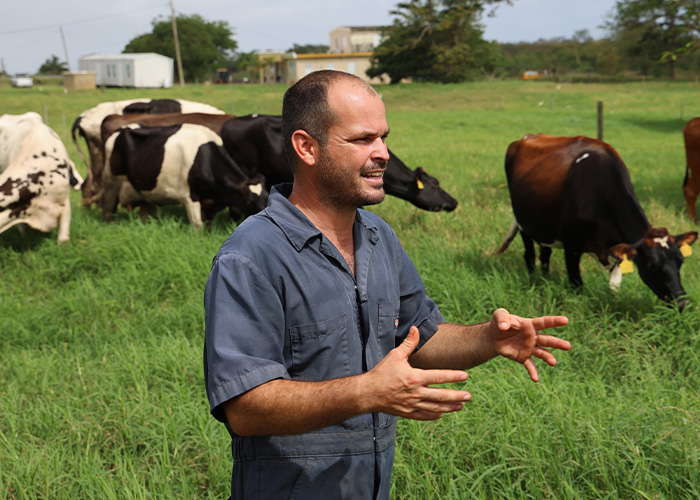
Carlos witnessed his father's unwavering dedication to dairy farming, to the point of being late to his own wedding to deliver a calf. “Fortunately, the one who waited at the altar was my mother, and they have been married for 37 years,” said Carlos as he described how farming became a passion for his entire family.
Carlos’ farm is a place where cows graze on 19 acres overlooking the Atlantic Ocean. Carlos’ method of rotational grazing has led him to produce quality milk for his family’s local cheese business, El Casero. To ensure quality, he performs genomic tests on his cows meticulously choosing them based on their performance potential.
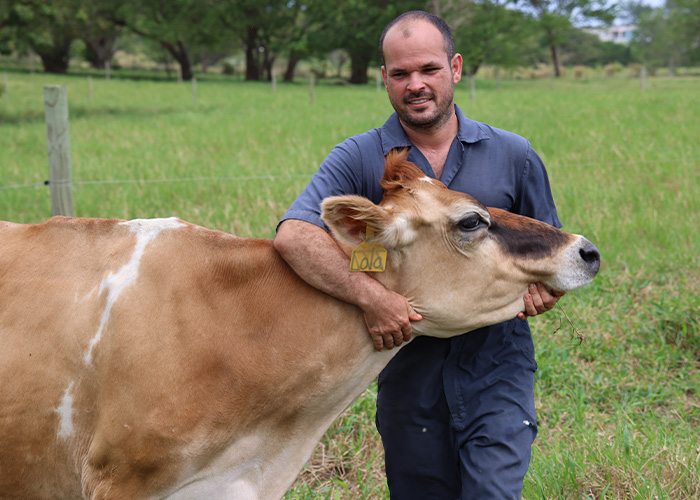
“As a dairy farmer, you need to have the language of a cow: which times of the day they walk outside [and] when they want to eat and drink,” said Carlos. “The one who understands that language is the one who walks the ranch every day.”
Passion for Conservation
Conserving natural resources for future generations is important to Carlos. In 2022, Carlos applied for assistance through the USDA Natural Resources Conservation Service (NRCS) Environmental Quality Incentives Program to implement conservation practices for brush management, fencing, pasture planting and prescribed grazing.
Pasture planting and prescribed grazing have provided Carlos’ cattle with nutritious food during dry seasons. Additionally, he’s planting trees with hedgerow practices to promote wildlife and silvopasture to provide shade for the cows. NRCS District Conservationist Linnette Rosado considers Carlos' farm an example for other dairy farmers in the area.
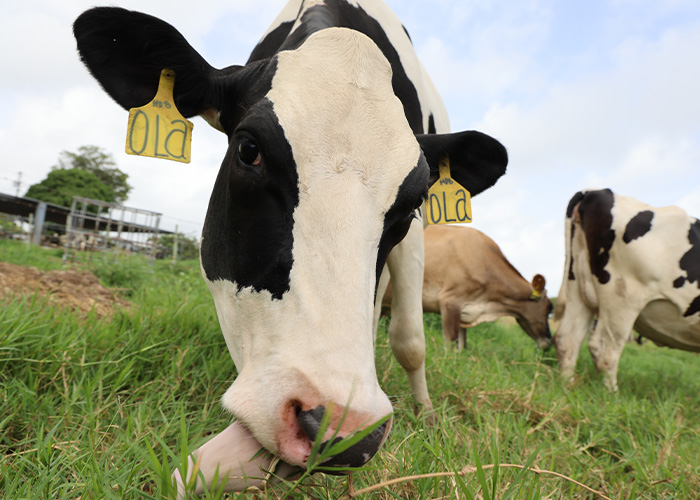
Agrotourism is another element of Carlos’ operation, providing educational tours for families to have fun, learn about each cow on the operation and the day-to-day life of a dairy farmer. Carlos’ cows have unique names: Ginger is the tallest of his herd, Lola is the most productive, Ola is the most social, Parcha is the laziest, and Alexandra is named in honor of NRCS Soil Conservationist Alexandra de León, who led him throughout his conservation plan.
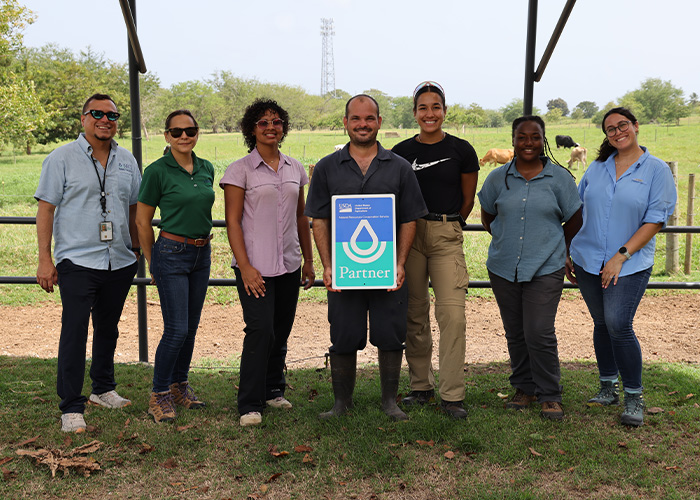
“Through the agency, I have worked with committed people,” Carlos said.
Reaching sustainability in a dairy farm operation can be challenging, but with passion and determination, Carlos has demonstrated it is possible. His hard work has solidified his legacy, not only for his family, but by serving as an example for other dairy farmers throughout the Caribbean.
More Information
Visit local farms, ranches, forests, and resource areas through our Fridays on the Farm stories. Meet farmers, producers, and landowners who are working to improve their operations with USDA programs.
USDA offers a variety of risk management, disaster assistance, loan, and conservation programs to help producers weather ups and downs in the market, recover from natural disasters, and invest in improvements to their operations. Learn about additional programs.
For more information about USDA programs and services, contact your local USDA service center.
 Loans and Grants
 Disaster Planning and Assistance
 Conservation
 Ag Business
 Farm Life