



This Friday, meet Brian Noonan of Jackson County, Iowa, where he is transforming his family’s 480-acre farm. The farm dates back five generations to the 1830s, when his family’s Irish ancestors purchased 180 acres.
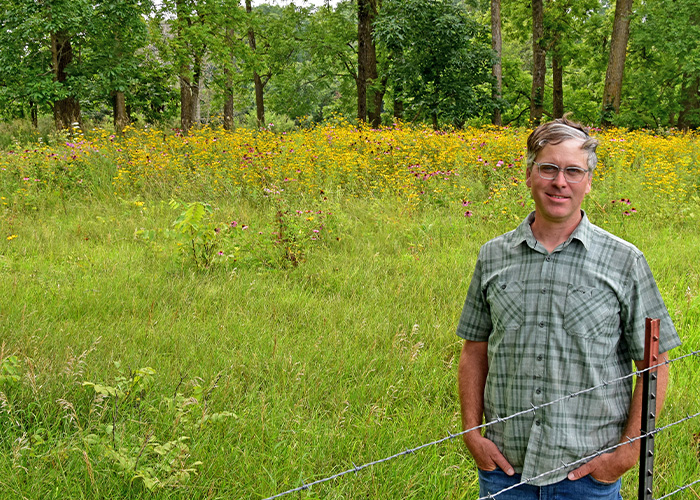
“We’ve had the farm in the family for so long,” he said. “I want to retain it and do it in a way to preserve it.”
Today, with the help of USDA’s Natural Resources Conservation Service (NRCS), the farm has increased its natural vitality and production benefits with 117 cropland acres, and two pastures that cover about 200 acres and hay ground.
Grazing Improvements
Brian’s father started the process of improving pasture grazing conditions in 2008, before Brian took over the farm. He contacted NRCS to develop a forestry management plan, in partnership with the Iowa Department of Natural Resources forestry specialists. The Noonans installed permanent fencing to keep cattle out of a creek and a degraded pond, implemented a timber stand improvement plan and renovated a well to add livestock watering areas.
“Having NRCS start working with my dad to help us install some of the fencing was really helpful,” said Brian. “It’s allowed me to go in and do some more intensive grazing management with electric fence to further subdivide pastures.”
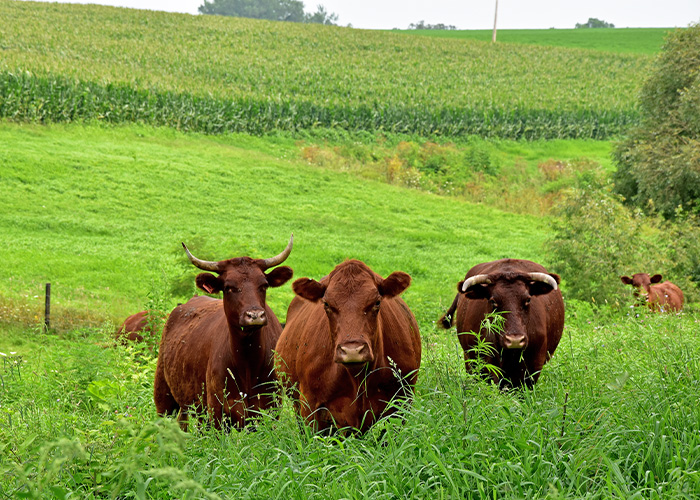
Today, he runs 60 cow/calf pairs that rotate about every three days through about a dozen paddocks. Brian says his Red Devon cattle are excellent grass finishers.
“It’s really good beef,” he said. “I enjoy raising grass-fed beef and I felt it was a good way to go for our farm.”
Boosting Conservation Efforts
Over the last five years Brian became more assertive about implementing conservation practices on his farm, collaborating with NRCS District Conservationist Lori Schnoor to continue his father’s conservation efforts that began nearly 20 years ago.
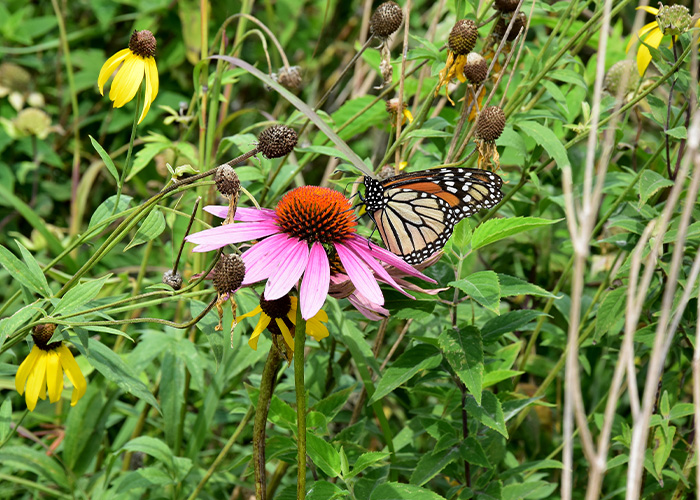
With a focus on grazing management and improving wildlife habitat and an eye on boosting the ecosystem, Brian applied for conservation funding assistance through both the Conservation Stewardship Program (CSP) and the Environmental Quality Incentives Program (EQIP) to help achieve his goals.
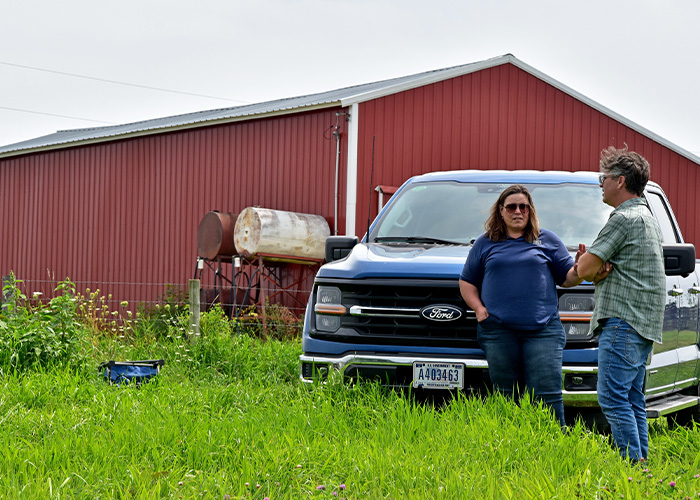
Noonan implemented a Grazing Bundle through CSP that includes practices like rotational grazing, weed treatment, and wildlife habitat management. The CSP grazing bundle is helping Brian reduce input costs and support his operation.
In 2019, Brian began utilizing EQIP to cover a portion of the cover crop costs on his cropland, which has helped reduce soil erosion and improve overall soil health. Since then, he has worked with NRCS to implement practices like fence, pasture and hay planting, livestock pipeline, a pumping plant, and watering facilities to support his grazing system.
Iowa NRCS State Grazing Specialist Jeff Matthias says Brian’s grazing operation improvements are helping the resource base of soil, water, and plants on the land he manages.
“Grazing management allows desirable forages to properly recover, which helps control weeds and minimize soil compaction,” said Jeff. “More water is now able to infiltrate, and desired forages are growing to feed the cattle. Fencing and limiting livestock access to streams and ponds helps protect water quality, stream banks from erosion and allows wildlife to have more cover and shelter on his land.”
Another major project Brian started in 2020 was planting a natural windbreak between the cropland and home acreage. The windbreak includes shrubs and trees such as oaks, spruces and pines that, in time, will decrease home energy usage, provide wildlife habitat, and even reduce snow drift. “I like the idea of the windbreak increasing biodiversity,” he said. “It’s also easier to plow the lane because it’s catching some of the snow.”
Brian says that although his operation is not certified organic, he uses no chemicals on the pasture and hay ground.
“A lot of my passion comes from the environmental aspect of the farm,” he said. “I am using cattle as an ecosystem management tool for grassland restoration.”
More Information
Visit local farms, ranches, forests, and resource areas through our Fridays on the Farm stories. Meet farmers, producers, and landowners who are working to improve their operations with USDA programs.
USDA offers a variety of risk management, disaster assistance, loan, and conservation programs to help producers weather ups and downs in the market, recover from natural disasters, and invest in improvements to their operations. Learn about additional programs.
For more information about USDA programs and services, contact your local USDA service center.
 Loans and Grants
 Disaster Planning and Assistance
 Conservation
 Ag Business
 Farm Life