



This Friday, meet Malon E.D. James, a 15-year-old hydroponic farmer in Atlanta, Georgia. What began as childhood curiosity has grown into a thriving hydroponic operation of vertical farms, producing more than 40 varieties of fruits, vegetables, and fiber crops in a biosecure indoor facility.
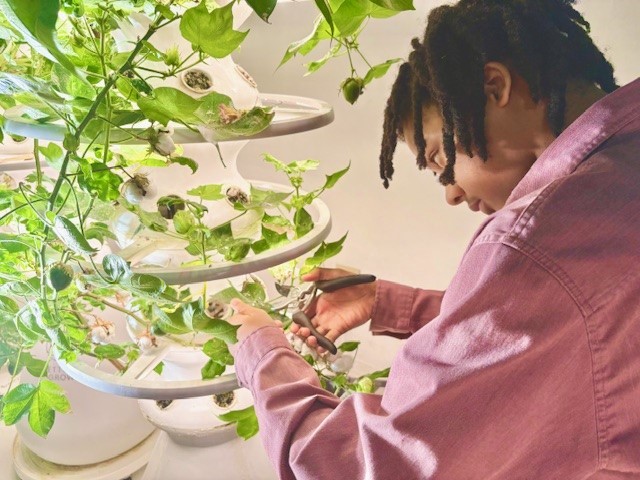
“I wanted to make sure people had access to healthy food, especially when traditional supply chains were disrupted,” Malon said. “Hydroponics gave me a way to grow clean, fresh produce for people who needed it most.”
That commitment to feeding others laid the foundation for a journey that now blends family traditions, cutting-edge science, and strong community support.
Family Roots and Innovation
Malon is a third-generation hydroponic farmer. He recalls watching his grandmother, Mattie James, germinate seedlings in water long before he knew the word “hydroponics.”
“I just knew I loved watching Mimi grow plants in a glass of water,” he said. “The roots were fascinating to me,” Malon says.
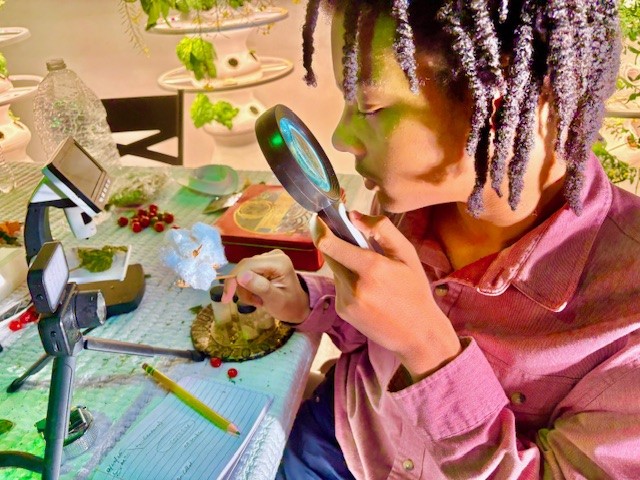
Today, he combines those early lessons with advanced technology. From designing custom organic nutrient blends to exploring robotics and AI integration, Malon’s farm operates more like a research lab than a traditional field. “One of my best helpers is Jarvis, my AI program,” he laughs. “We get so much done together.”
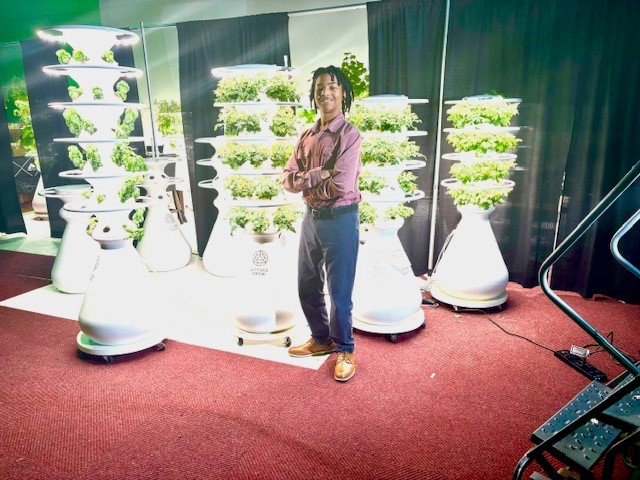
Scaling up his vision required resources, and that’s where the USDA Farm Service Agency (FSA) stepped in. With funding from an FSA youth loan, Malon was able to purchase critical equipment for his farm.
FSA youth loans provide opportunities for young entrepreneurs to acquire experience and education in agriculture-related skills.
“[FSA] programs aren’t just for traditional farmers, they’ve helped innovators like me scale up ideas and reach new audiences worldwide,” Malon says. “The support gave me the tools I needed to move from an idea to something real.”
Dr. Marcus Green is one of Malon’s mentors. After learning more about Malon’s farming projects, Dr. Green helped Malon secure his facility to provide the space for Malon to expand his operation. “At first, I didn’t fully understand hydroponics as agriculture, but Malon’s drive and creativity are undeniable. The USDA’s investment wasn’t just in equipment, it was in a young man’s vision to change agriculture,” he said.
Judge Terrinee Gundy, another mentor who has supported Malon for years, agrees. “Malon represents the future of farming,” she says. “He is proof that when you invest in young people, especially through programs like these, the impact multiplies. He’s not just growing food, he’s growing opportunities for entire communities.”
Overcoming Challenges
Despite his accomplishments, Malon acknowledges that it hasn’t always been easy.
“Most agricultural programs in Georgia are geared toward soil-based farms,” he explains. “Getting support for a hydroponic operation was tough. Building a biosecure farm, developing lighting systems, and designing nutrients all took creativity and mentorship.”
Thanks to USDA connections, Malon was introduced to universities, city and state departments, and other collaborators who helped him expand his reach.
“These connections opened doors I didn’t even know existed,” he says. “They helped me turn a small farm at home into a project with real impact.”
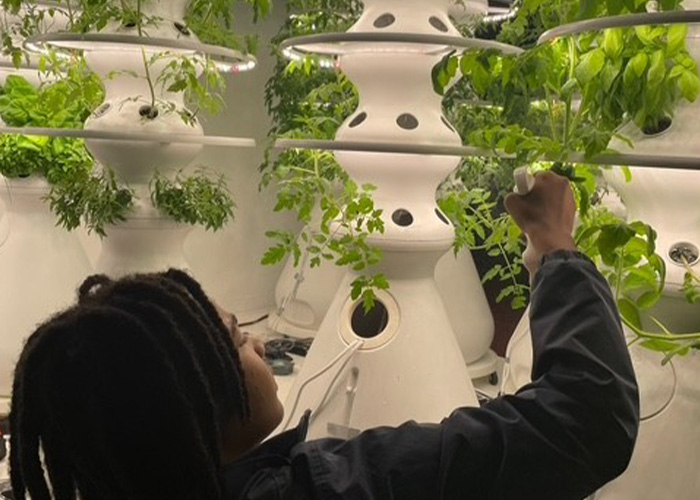
Inside his farm lab, Malon has grown everything from leafy greens to cotton — a crop rarely associated with hydroponics. He has also developed organic mineral nutrient mixtures that give plants optimal growth, part of his broader research in Controlled Environment Agriculture (CEA).
For Malon, though, farming isn’t just about science. It’s also about people. “Agriculture is more than growing food; it’s about creating climate-smart, sustainable ways to feed communities,” he says.
That mission has connected him to a global network of supporters. “I now have an extended family from all over the world, people who guide me like aunts and uncles,” he adds.
Looking Ahead
Malon’s future goals are ambitious: expand into a larger facility, continue research on sustainable substrates, and refine lighting and nutrient formulas to make hydroponics practical for households everywhere.
“Farming bridges tradition and the future,” he says. “I want to make hydroponics accessible and sustainable for generations to come.”
Malon’s journey is a reminder of what’s possible when programs empower youth innovators. “Malon isn’t just a success story,” said Judge Grundy. “He’s a living example of why we must continue investing in the next generation of farmers.”
More Information
Visit local farms, ranches, forests, and resource areas through our Fridays on the Farm stories. Meet farmers, producers and landowners who are working to improve their operations with USDA programs.
New to farming? USDA offers dedicated help to beginning farmers and ranchers and can help you get started or grow your operation.
USDA offers a variety of risk management, disaster assistance, loan, and conservation programs to help producers weather ups and downs in the market and recover from natural disasters as well as invest in improvements to their operations. Learn about additional programs.
For more information about USDA programs and services, contact your local USDA service center.
Brandon Crumsey a County Executive Director for FSA Georgia.
 Loans and Grants
 Disaster Planning and Assistance
 Conservation
 Ag Business
 Farm Life