


This Friday, meet first-generation farmer and rancher Tommy Salisbury of Collinsville, Oklahoma. He started his first herd at 15 with a youth loan from USDA’s Farm Service Agency. Years later, Tommy’s neighbor gave him the opportunity to purchase his property. Since then, he’s planted his roots deep in the local and national agriculture community, determined to make an impact. In addition to cattle, he also annually plants and harvests soybeans and wheat.
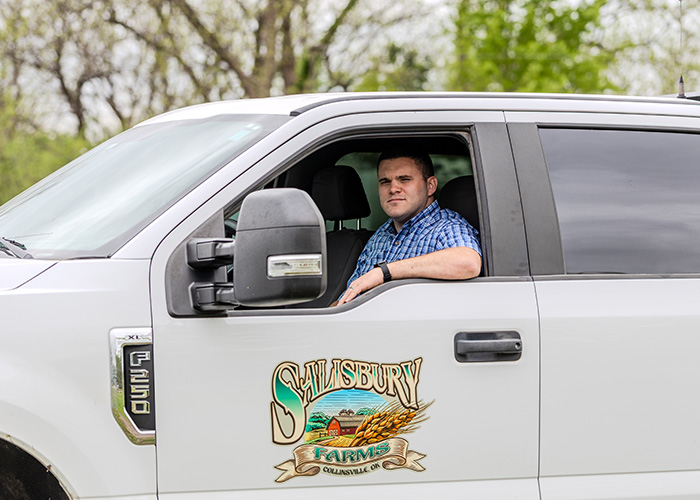
“Growing up, my parents were not involved in agriculture,” he said. “I started working on a ranch across the street, where I developed a passion for agriculture.”
Starting from Scratch
FSA youth loans provide opportunities to help youth acquire practical experience and knowledge in agriculture, while encouraging the next generation of farmers and ranchers.
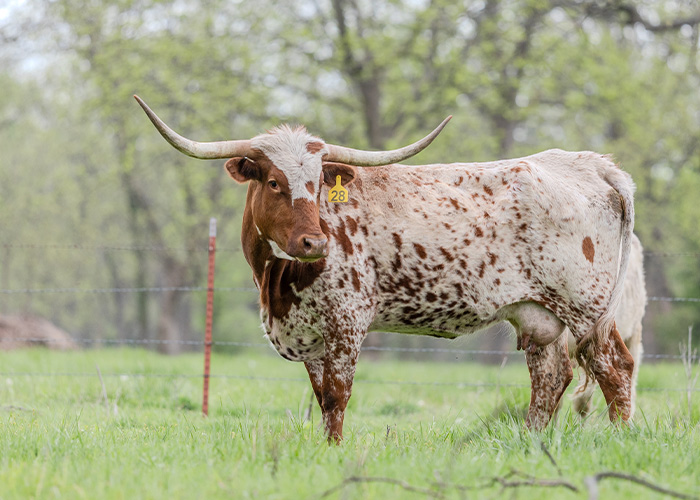
Tommy used his youth loan to purchase a few cows, eventually growing his herd to 25 before he went to Pittsburg State University in Kansas. Tommy sold his cows to help pay for his bachelor’s degree and an education at John Deere University.
“Starting from scratch is not easy, especially when you do not have a family history of farming,” he said. “Banks are reluctant to lend to 20-year-olds who want to farm. The USDA’s FSA programs give younger farmers opportunities to build equity and the start that is hard to get.”
FSA helps people build a financial track record to be successful in production agriculture.
Tommy expressed difficulty in obtaining farm loans through commercial lenders, especially without family farming history and a gap in his own operation. Through the FSA, Tommy was able to work with his local USDA Service Center to obtain the capital needed to build equity and purchase land and cattle.
“I learned a lot of record-keeping through FFA and 4-H,” Salisbury said. “The loan application was intimidating at first, but I had great people at FSA like Carol Stipe, the Nowata County farm loan manager.”
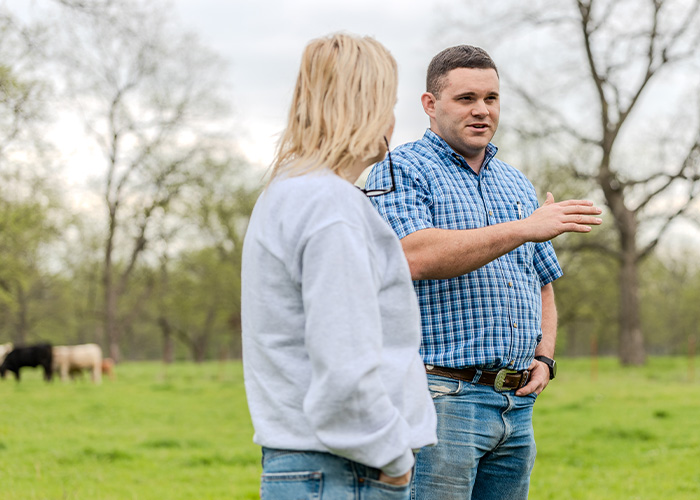
After purchasing their property in 2014, Tommy and his wife began establishing themselves within their community in Collinsville through diverse agriculture operations, including their purchase of a feed store and a sale barn for cattle, horses and other livestock, in 2021 and 2022.
USDA Protection and Recovery Assistance
In addition to FSA loans, Tommy has leveraged multiple USDA programs to help manage risk and provide a safety net, including the Agriculture Risk Coverage (ARC) and Price Loss Coverage (PLC) programs through FSA. These programs aim to protect farmers from significant income losses due to fluctuations in crop prices or revenue shortfalls. While ARC provides payments when the actual revenue for a farm is less than a guarantee set based on historical data and market conditions, PLC provides payments when the marketing year average price for a covered commodity falls below its effective reference price.
FSA disaster programs, like the Livestock Forage Disaster Program, have helped him recover from natural disasters. To get ahead of mother nature, he insures his grazing lands through FSA’s Noninsured Disaster Assistance Program, which offers financial support to producers of non-insurable crops to protect against natural disasters that result in lower yields, destroyed crops, or the inability to plant.
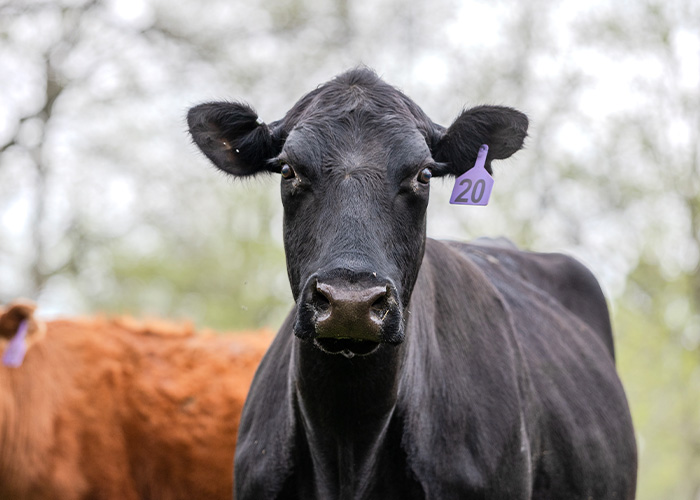
Tommy has also utilized Federal crop insurance programs to protect his wheat, soybeans, and cattle.
Federal crop insurance is managed by USDA’s Risk Management Agency (RMA). RMA serves America’s agricultural producers through effective, market-based risk management tools to strengthen the economic stability of agricultural producers and rural communities. Approved Insurance Providers sell and service Federal crop insurance policies in every state and in Puerto Rico through a public-private partnership with RMA.
Gaining Wisdom Through Service
Tommy joined his local FSA county committee in 2019 and is currently the chairman.
“One of the main reasons I got involved with the county committee was for the education,” he said. “Talking to older and more experienced farmers and ranchers has been invaluable – they’ve been in the industry for years and have so much wisdom to share.”
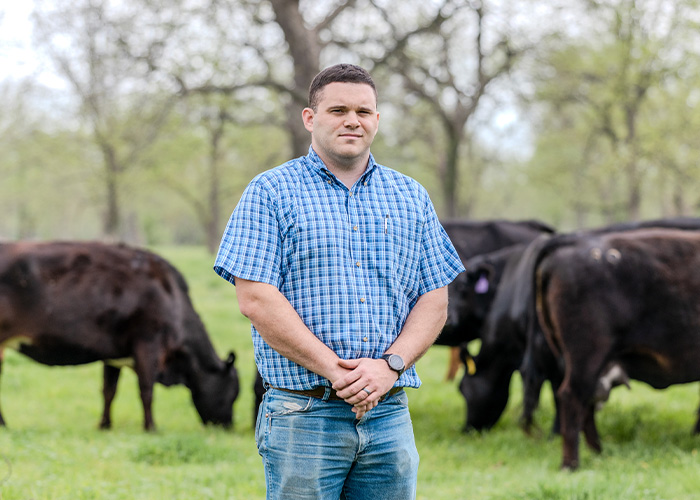
He’s also involved with several other agriculture boards. Tommy is the national chair of the American Farm Bureau Young Farmers and Ranchers Committee and serves locally as president for the Tulsa County Farm Bureau.
“Right now, I am focused on keeping the farm operations going and managing the business,” Salisbury said. “Farming requires discipline and organization. It wasn’t always easy, but I wouldn’t trade it for anything.”
More Information
Visit local farms, ranches, forests, and resource areas through our Fridays on the Farm stories. Meet farmers, producers, and landowners who are working to improve their operations with USDA programs.
USDA offers a variety of risk management, disaster assistance, loan, and conservation programs to help producers weather ups and downs in the market, recover from natural disasters, and invest in improvements to their operations. Learn about additional programs.
For more information about USDA programs and services, contact your local USDA service center.
 Loans and Grants
 Disaster Planning and Assistance
 Conservation
 Ag Business
 Farm Life