



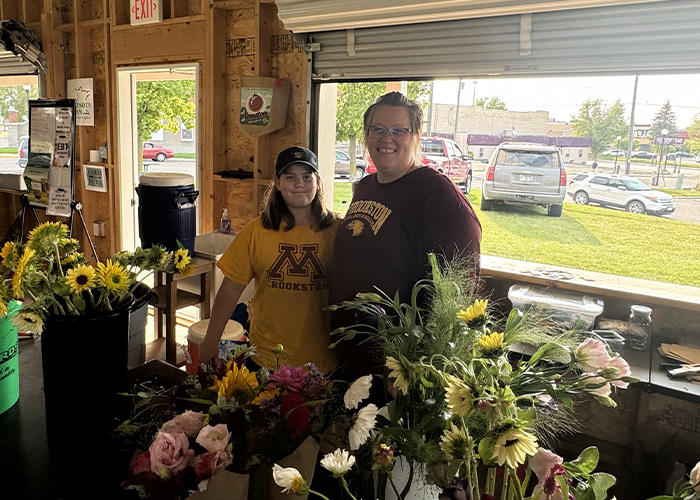
This Friday, meet Chris and Sarah Klawitter of Kountry Korner Floral in Polk County, Minnesota. The Klawitters began planting perennials in their yard to enjoy during the warmer months. What started as a passion project eventually became a business plan in January 2023, when the winter weather inspired Sarah’s idea to raise and sell annual cut flowers. They hit the ground running that year, planting 4,000 annual seedlings and 1,200 perennials. Since then, the operation has blossomed, increasing their production area to half an acre.
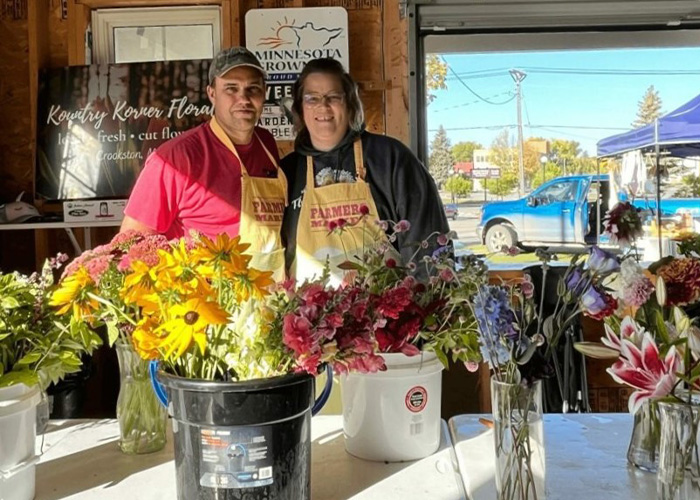
The Klawitters were selected as the 2025 University of Minnesota’s Polk County Farm Family of the Year. Farm families are chosen annually based on their demonstrated commitment to their communities and to enhancing and supporting agriculture.
Expanding with USDA Programs
After a successful first year, they started looking toward the 2024 season. That spring, the Klawitters doubled their growing space and planted their first spring crop of daffodils, peonies and tulips. They also introduced a kaleidoscope of new varieties, including potamic snapdragons, bachelor buttons, bells of Ireland, statice, giant poppy seeds and ranunculus.
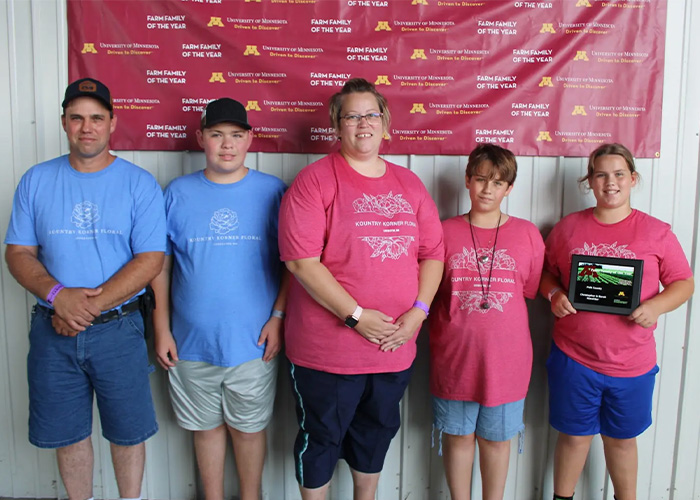
To increase their production capabilities, the Klawitters reached out to their local USDA Service Center for assistance.
USDA’s Natural Resources Conservation Service (NRCS) worked with the Klawitters to install two high tunnels through the Environmental Quality Incentives Program (EQIP). High tunnels protect plants from mother nature’s uncertainties and allow farmers to extend their growing seasons.
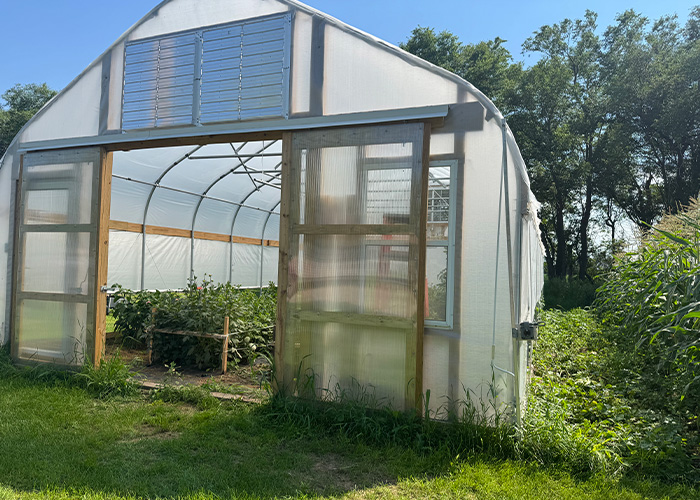
A microloan from USDA’s Farm Service Agency (FSA) helped them cover the up-front costs of installing the high tunnels as well as purchasing equipment. Microloans offer more flexible access to credit and serve as an attractive loan alternative for smaller farming operations, which can often face limited financing options.
“Microloans have allowed us to invest in the farm and grow our operation substantially,” Sarah said. “We were able to obtain not only a utility tractor and implements, but aid in building two high tunnels to exceed the minimum NRCS specifications to meet the needs of our operation.”
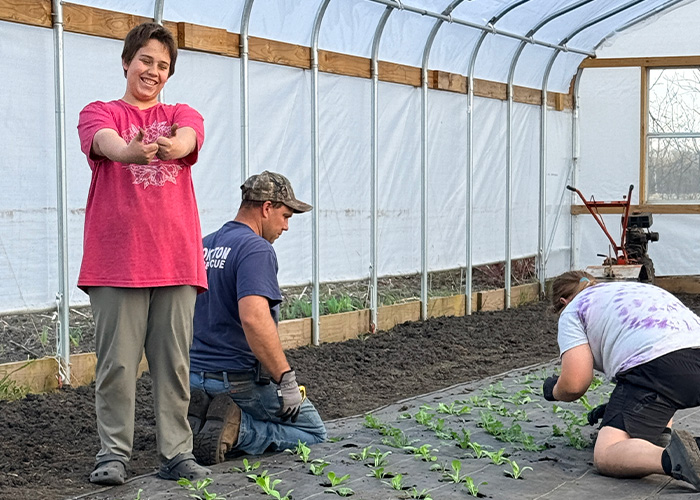
In addition to the expected advantages of growing in high tunnels, the Klawitters found that the flowers in the high tunnels grew much longer stems. Longer stems are important in the fresh cut flower business as they offer flexibility for a variety of arrangements and can yield a higher price. The dusty miller, a silvery, velvety filler to add texture and contrast to brighter flowers in a floral arrangement, grew six inches longer. The snapdragon, commonly used to give height and structure to a floral arrangement, also grew stems considerably longer in the high tunnel.
Like all farmers, the Klawitters are uncertain about what mother nature may put in their path year after year. Although they are continually in a dance with mother nature, the high tunnels provide protection for their plants that will enable Kountry Korner Floral to continue to grow and flourish in ways never imagined on that wintery January day when Sarah thought, “What would it take to start a cut flower farm?”
More Information
Visit local farms, ranches, forests, and resource areas through our Fridays on the Farm stories. Meet farmers, producers, and landowners who are working to improve their operations with USDA programs.
USDA offers a variety of risk management, disaster assistance, loan, and conservation programs to help producers weather ups and downs in the market, recover from natural disasters, and invest in improvements to their operations. Learn about additional programs.
For more information about USDA programs and services, contact your local USDA service center.
 Loans and Grants
 Disaster Planning and Assistance
 Conservation
 Ag Business
 Farm Life