


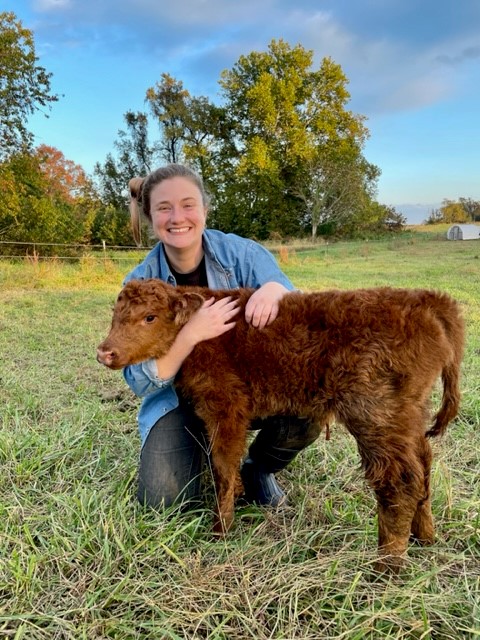
Sarah Campbell is the National Beginning Farmer and Rancher Coordinator for USDA. In this Ask the Expert, Sarah answers questions about common misconceptions about beginning farmer and rancher eligibility, available programs to help and how to chart your path as a beginning farmer.
Am I too old?
There is no age limit or age requirement to be considered a beginning farmer or rancher. In fact, according to the 2022 Census of Agriculture, 61% of beginning farmers and ranchers are between the ages of 35 – 64, with an average age of 47. “Beginning” and “youth” are two distinct categories of producers and USDA provides specific resources for each.
USDA defines a Beginning Farmer and Rancher (BFR) as anyone who has not operated a farm or ranch for more than 10 years. Based on this general definition, each USDA agency has specific program criteria for BFRs, all of which focus on experience rather than age:
- Farm Service Agency (FSA) - An individual who has not operated a farm or ranch for more than 10 cumulative years.
- Natural Resources Conservation Service (NRCS) - An individual who has not operated a farm, ranch, or non-industrial private forest (NIPF) for more than 10 consecutive years.
- Risk Management Agency - An individual who has not actively operated and managed a farm or ranch in any state, with an insurable interest in a crop or livestock as an owner-operator, landlord, tenant, or sharecropper for more than 10 crop years. In addition to receiving the current BFR benefits (including the additional 10 percent premium subsidy rate) for up to 10 crop years, BFRs will receive an additional 5 percent premium subsidy rate for the first two crop years, an additional 3 percent premium subsidy rate the third year, and an additional 1 percent premium subsidy rate the fourth year.
Is my operation too small?
There is no size requirement for operations being managed by a beginning farmer or rancher. As in most businesses, BFR operations usually start small and grow over time. If you are taking over a large operation, you are still eligible for USDA BFR resources and considerations. However, in the case of the Beginning Farmers and Ranchers Loans, you cannot own a farm or ranch larger than 30% of the average size farm in the county, as determined by the most current Census for Agriculture at the time the loan application is submitted.
Do I have to own land?
You do not have to own land to be considered a BFR and participate in USDA programs. If you can provide proof you and the owner have an agreement through a lease or signed letter, you are able to register as a USDA customer and submit program applications.
You do have to be in business to make a profit. Personal gardens and nonprofit organizations that donate their harvests are not eligible for FSA program participation.
Are there grants to help me start farming?
USDA does not have grants to start farm operations. FSA offers low interest loans, which can be used to purchase farmland, fund business expenses or make improvements, but there are no grants to buy or start a farm. Other agencies, such as NRCS, have financial assistance programs to help new farmers with natural resource concerns or purchasing a high tunnel, but these programs do not provide 100% of the funding. Beginning farmers may be able to secure grant funding from state government agencies, or philanthropic or non-profit organizations to help start or expand a farm enterprise, but you must apply directly to those organizations.
What kind of products can I produce?
BFRs are not restricted to producing specific products. You have the freedom and flexibility to select the crop and livestock that best fits your operation and environment. If you need assistance determining the products and services that best fit your business model, reach out to your local Cooperative Extension office. The staff there are prepared to provide information, training and technical assistance.
Where do I start?
The first step is to call your BFR Coordinator. Each state has a Beginning Farmer and Rancher team led by a State Coordinator. Your State Coordinator can help you navigate the USDA process and connect you to partner organizations that specialize in working with beginning farmers and ranchers. Even if you’re not USDA-ready, State Coordinators assist you in determining your next steps.
The farmers.gov website offers information on USDA resources for beginning farmers and ranchers and introduces you to the network of resources that go beyond USDA.
Jocelyn Benjamin is a public affairs specialist at USDA FPAC
 Loans and Grants
 Disaster Planning and Assistance
 Conservation
 Ag Business
 Farm Life