



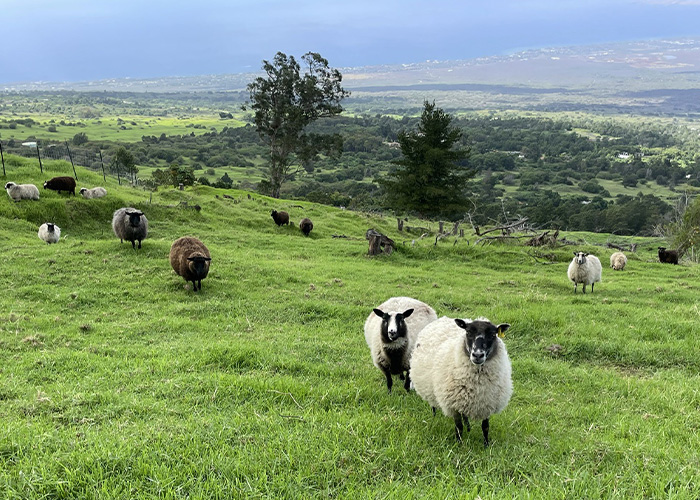
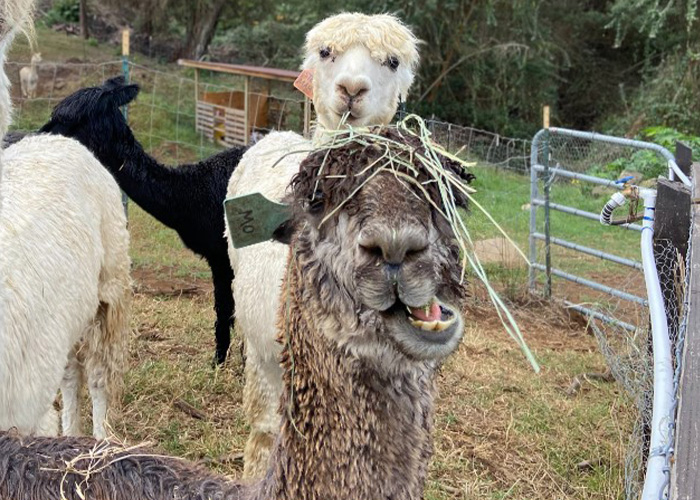
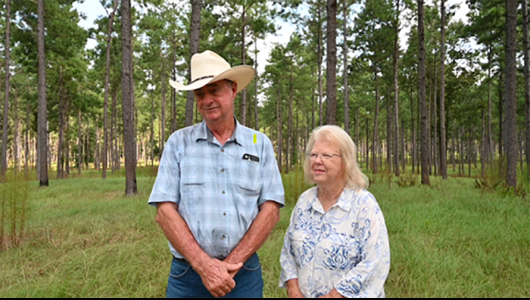
This Friday, meet Andy Walker and Jennifer Ely, natural fiber producers and owners of Cloud Castle Farm in Kula, Hawaiʻi, on the island of Maui. With a unique farming operation, they raise an assortment of livestock that are different than most: Suri alpaca, Angora goats, various sheep, Nigerian dwarf goats and Angora rabbits. The couple owns all the equipment needed to process the fiber and make rugs. They also raise chickens, ducks, and bees.
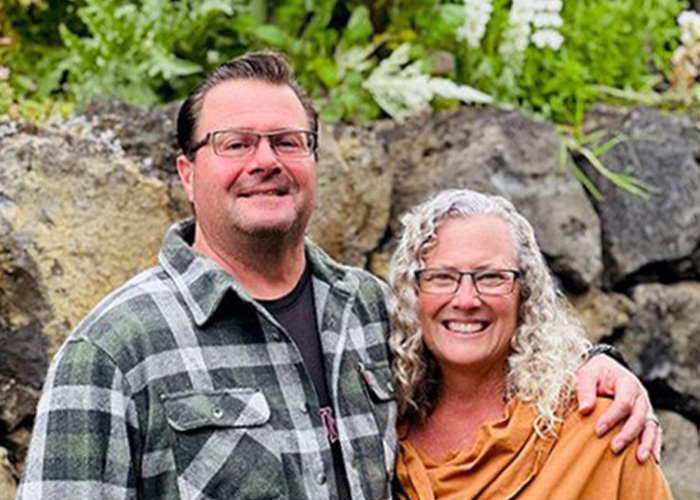
When Andy and Jennifer purchased the property, they didn’t have a water meter, forcing them to haul in water every week for their livestock. They reached out to local staff with USDA’s Natural Resources Conservation Service (NRCS) to seek any assistance available to them, and they were able to find support with the Environmental Quality Incentives Program.
EQIP is NRCS’ flagship conservation program that helps farmers, ranchers and landowners integrate conservation into working lands. The program provides financial and technical assistance to address natural resource concerns and to deliver environmental benefits. This can include things like improved water and air quality, conserved ground and surface water, reduced soil erosion and sedimentation, and improved or created wildlife habitat.
Getting Started
When Andy and Jennifer met with Kahului Service Center staff to discuss the different possibilities for their grazing operation, they were excited to learn that NRCS could not only assist with their pasture but also with native reforestation on their property. At the time, Jennifer had recently acquired a book about native Hawaiian plants and species used to make dye. It inspired her to grow some of her own plants to dye the fiber they produce.
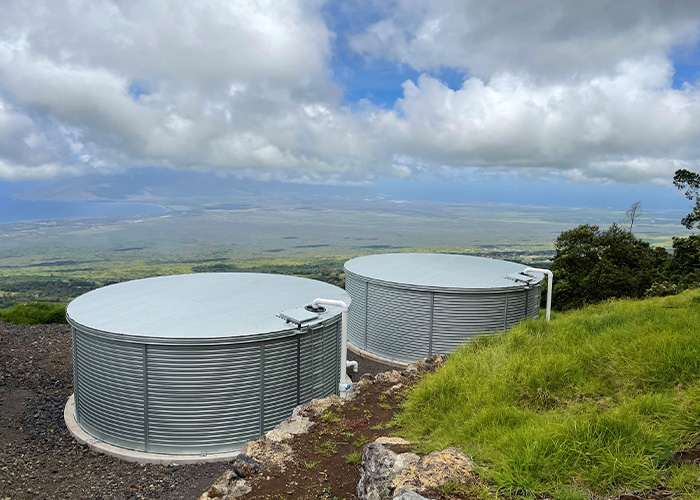
For the pastureland, they installed fences to create 11 paddocks and a stock water system that included a water harvesting catchment, a watering facility with three water tanks and a livestock pipeline. Andy and Jennifer are now in the prescribed grazing portion of their plan after completing the pasture infrastructure. It’s a key component of their complex grazing management. It allows them to keep male and female animals separate to control breeding.
In a forested section of their property dominated by mature black wattle (Acacia mearnsii) perched on a steep slope, Andy and Jennifer implemented various conservation practices including fencing, tree and shrub site preparation and establishment, woody residue treatment, mulching, brush management, and upland wildlife habitat management. They removed the black wattle, spread mulch throughout the field and constructed an 8-foot fence. So far, they’ve installed 1,300 native trees and shrubs with plans to plant 1,700 more in the next year.
Andy and Jennifer have accomplished much over the past couple of years and are looking forward to continuing to see their livestock herd and native forest grow.
More Information
Visit local farms, ranches, forests, and resource areas through our Fridays on the Farm stories. Meet farmers, producers, and landowners who are working to improve their operations with USDA programs.
USDA offers a variety of risk management, disaster assistance, loan, and conservation programs to help producers weather ups and downs in the market, recover from natural disasters, and invest in improvements to their operations. Learn about additional programs.
For more information about USDA programs and services, contact your local USDA service center.
 Loans and Grants
 Disaster Planning and Assistance
 Conservation
 Ag Business
 Farm Life