



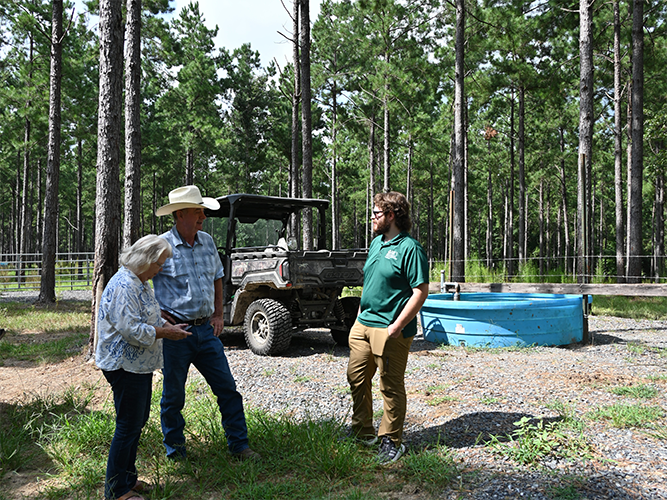
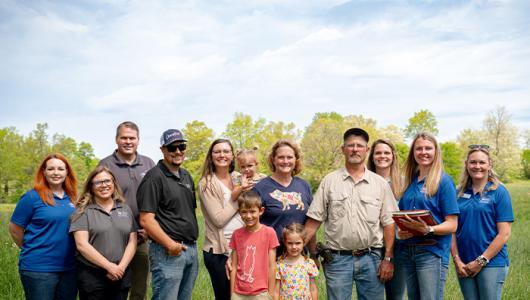
This Friday meet Mike and Becky Jordan of Winn Parish, Louisiana, where they manage a sustainable, silvopasture system that supports livestock grazing with tree and forage production on their 80-acre operation, M and B Jordan Farm.
The Dream
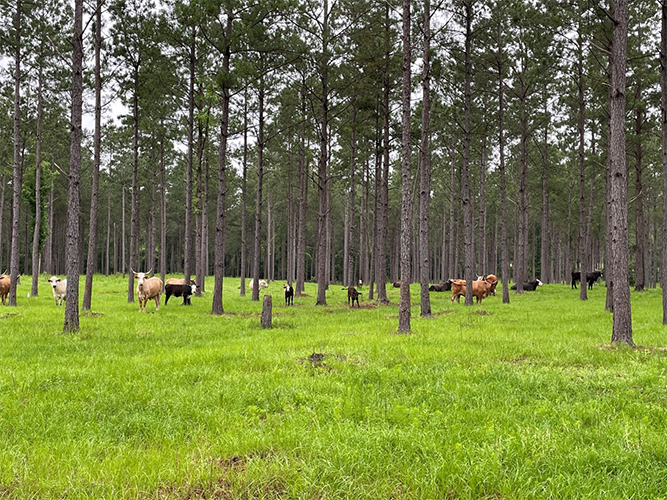
For many years, Mike and Becky had their sights set on an overstocked 17-year-old pine plantation near where Mike grew up and their current home. After years of inquiring, their persistence finally paid off in 2020 when they purchased the pine stand to transform it into silvopasture and increase the grazing capacity for their herd of cross-bred (mostly Bradford and Angus) cows.
Silvopasture is the art of combining trees, forage, and grazing livestock on a single piece of land for mutual benefits. By thinning dense woodlands or planting trees in open pastures, landowners create a balanced ecosystem where sunlight still feeds the grass below. This intentional layout offers animals premium shade that slashes heat stress, keeping herds healthier and more content. Ultimately, it delivers a win-win for farmers like the Jordans by creating diverse revenue streams like timber and livestock, all while building healthier soil.
The Work
Support from USDA’s Natural Resources Conservation Service (NRCS) helped the Jordans improve their overall operation. They developed a plan to increase grazing capacity and address other resource concerns such as the wildfire risk, productivity of the current loblolly pine stand, and wildlife habitat.
The bulk of the work to transform the land began in the fall of 2022 with NRCS’ Environmental Quality Incentives Program (EQIP) helping fund several conservation activities. First, the Jordans thinned the trees. Mulching biomass followed in the spring of 2023. Later that year, they continued with an herbaceous spray to eliminate hardwood competition for the pines. About six weeks later, a controlled burn to prepare for grass planting followed.
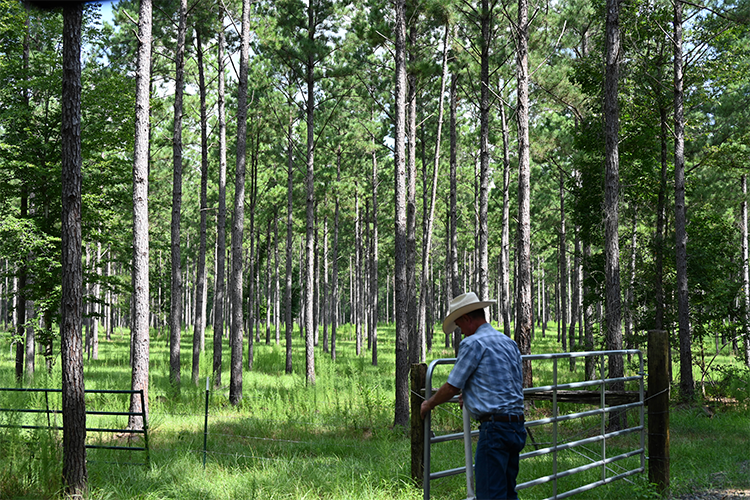
Next came the cross-fencing and water troughs to support rotational grazing. Finally, Pensacola Bahia grass was planted and fertilized in the spring of 2024.
After more than two years of land transformations, the Jordans finally turned cows out onto the land in the fall of 2024. They continue to improve their property through voluntary conservation with NRCS’ help.
More Information
Visit local farms, ranches, forests, and resource areas through our Fridays on the Farm stories. Meet farmers, producers, and landowners who are working to improve their operations with USDA programs.
USDA offers a variety of risk management, disaster assistance, loan, and conservation programs to help producers weather ups and downs in the market, recover from natural disasters, and invest in improvements to their operations. Learn about additional programs.
For more information about USDA programs and services, contact your local USDA service center.
 Loans and Grants
 Disaster Planning and Assistance
 Conservation
 Ag Business
 Farm Life