



This Friday, meet the Hinton family of Breckinridge County, Kentucky. Hinton Legacy LLC is a multigenerational family operation where the rolling hay fields, row crops, bright cut flower patches and forestland show the care the family puts into their land each day. For the Hintons, farming is rooted in family, tradition, and a commitment to caring for the soil to keep it in production for generations to come.
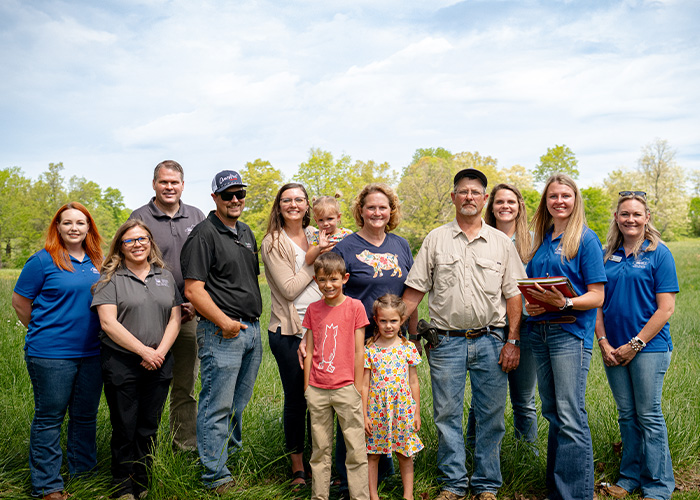
Steven Hinton runs the farm with his wife, Carol, and their daughters, Mary Hinton and Elizabeth Gipson, son‑in‑law, Dylan Gipson, and three grandchildren.
Putting Conservation Practices to Work
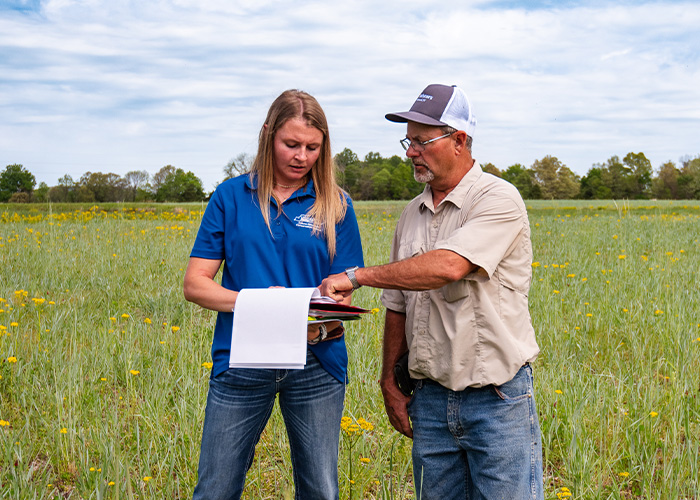
After noticing several issues on their farm, including soil erosion, compaction, poor plant health, and water quality concerns, the Hintons reached out to USDA’s Natural Resources Conservation Service (NRCS) in 2024. With the help of NRCS staff in the Hardinsburg USDA Service Center, the family began shaping a conservation plan through the Environmental Quality Incentives Program (EQIP) to improve their land and strengthen their operation.
“The NRCS programs have helped our operation become more sustainable,” said Steven. “We have used the programs with NRCS to make the land better for the next generations so that when they have the chance to be a part of the farm, they will have a base to continue to build.”
A Commitment to Caring for the Land
Continuing their conservation efforts, the Hintons enrolled in the new NRCS Regenerative Pilot Program (RPP). This pilot program addresses whole-farm resource concerns through support for voluntary regenerative agriculture conservation plans. RPP puts American farmers first as a part of the solution to Make America Healthy Again.
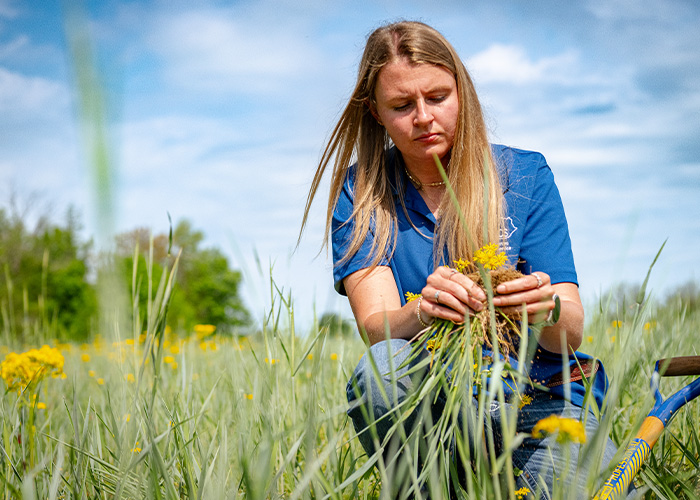
Through RPP, the Hintons are planning to implement multiple conservation practices including soil health testing, conservation crop rotation, no‑till, cover crops, critical area planting, grassed waterways, mulching, forage harvest management, and pasture and hay planting. These practices work together to improve soil structure, reduce erosion, manage water, and support the long-term productivity of their crops and pastures.
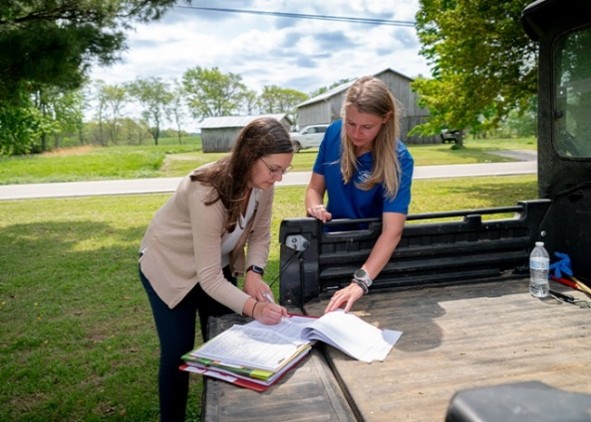
“We have worked alongside our NRCS office to assess what would be the most beneficial for our farm,” Steven said. “The staff at our local office are very hands-on when it comes to assisting us. They are timely with appointments and always prepared to keep us moving in the right direction.”
As the farm expands, caring for the land remains a priority for the Hintons.
“We grow hay, row crops, and cut flowers on our farm, so we have a wide variety of resources needed to keep the land in the best shape possible,” he said. “We want to preserve the land so that we can continue to grow the crops with the resources the land provides.”
Inspired by the Past, Focused on the Future
Farming is deeply tied to the Hinton family’s history and the future they hope to pass down.
“Our inspiration to farm comes from the generation before us and the generations that will follow,” Steven said. “Our parents and grandparents farmed before us, and the kids and grandkids will come after us. We want to build this farm to be profitable for many years to come.”
They also encourage other producers to reach out to USDA for help as they consider options for improving their land.
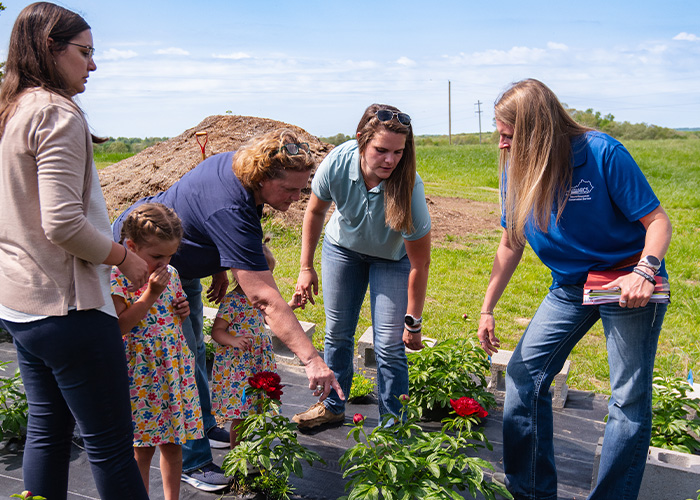
“One piece of advice I have for someone wanting to work with USDA is that it will be a great experience if you truly want to be a better steward of your land,” he said. “The NRCS supervisors, technicians, and staff are always willing to help, listening to our needs to make a plan that will work well for years to come, not just the current season.”
Hinton Legacy LLC shows what is possible when a family commits to stewardship and works together with USDA to strengthen their land and their future. Like many farmers across the country, the Hinton’s are working every day to ensure their land remains productive, resilient, and ready for the next generation.
More Information
Visit local farms, ranches, forests, and resource areas through our Fridays on the Farm stories. Meet farmers, producers, and landowners who are working to improve their operations with USDA programs.
USDA offers a variety of risk management, disaster assistance, loan, and conservation programs to help producers weather ups and downs in the market, recover from natural disasters, and invest in improvements to their operations. Learn about additional programs.
For more information about USDA programs and services, contact your local USDA service center.
 Loans and Grants
 Disaster Planning and Assistance
 Conservation
 Ag Business
 Farm Life