



This Friday meet Holly Henderson, a fourth-generation timber producer breathing new life into Pine Island, her family’s operation in Angelina County, Texas. Pine Island has become a haven for wildlife, and it’s something Holly takes great pride in. Holly enjoys seeing the animals on her family’s property, which also includes oil and gas mineral production and a hunting club dating back more than 90 years. To her, the land represents her family’s longstanding resilience and dedication.
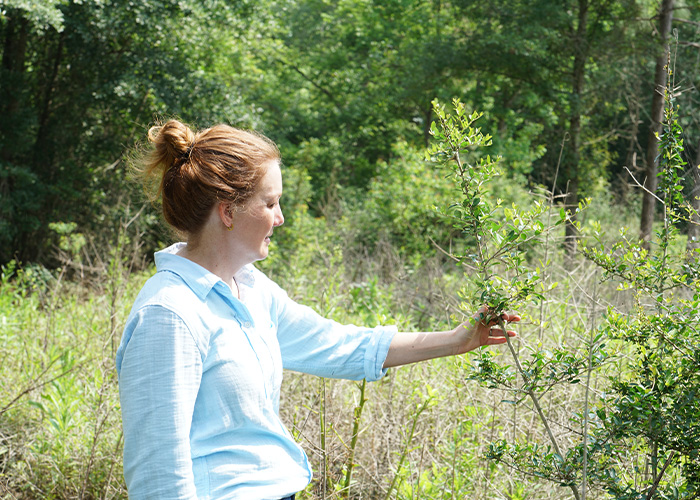
Within the wooded areas, wildlife thrives on the land they call home. “Turkey, white-tailed deer, red-cockaded woodpeckers, coyotes and alligator snapping turtles,” Holly said, her eyes lighting up. “The fishing’s good, too.” Birds such as herons, egrets, wood storks and ducks, including teal and mallards, also find refuge here.
Deep Family Roots
“My great-grandfather, Simon Henderson, started Angelina Lumber Co. in 1932,” Holly said. Although the original sawmill lasted only three years, the land stayed in the family and has grown into a nearly 3,000-acre property. “Pine Island is the oldest property in the family.”
Holly, her two sisters and extended family collectively own the land, but she has managed it for the past nine years.
“My father ran the business for 40 years until I took over,” said Holly, who moved back home from a photography career in New York City in 2016 after her father became ill. In the years that followed, she learned as much as she could from him.
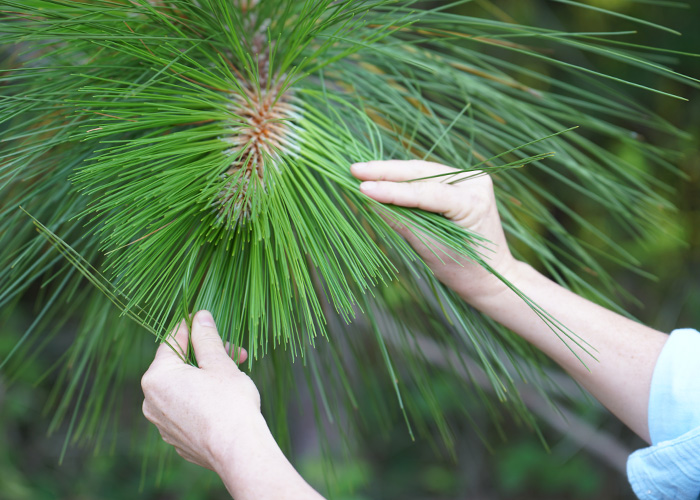
“One thing he taught me when I came home was the importance of bringing back native longleaf pine,” she said. While longleaf pine is native to the area, many landowners converted their plantations to loblolly. “Years before, he’d planted some tracts of longleaf. We’ve really made an effort to plant more, do more burning and promote that species.”
Holly credits funding received from the USDA’s Natural Resources Conservation Service (NRCS) for making that possible.
Partnering with NRCS
Recognizing the immense task of managing Pine Island, Holly turned to NRCS for support in 2019. “The changes have been incredible since working with NRCS,” she said.
Initial reforestation efforts focused on longleaf and loblolly pine to maintain wildlife habitat. While she continues managing the land for timber production, her interest in environmental conservation has expanded. Through the NRCS Environmental Quality Incentives Program (EQIP), she has taken on reforestation, prescribed burning and invasive species control, transforming parts of the property into healthier habitats.
“Of course, it’s working land, so they’re harvesting timber and replanting,” NRCS Resource Team Leader Justin Parks said. Their collaboration has helped revive native longleaf pine, benefiting both the environment and wildlife.
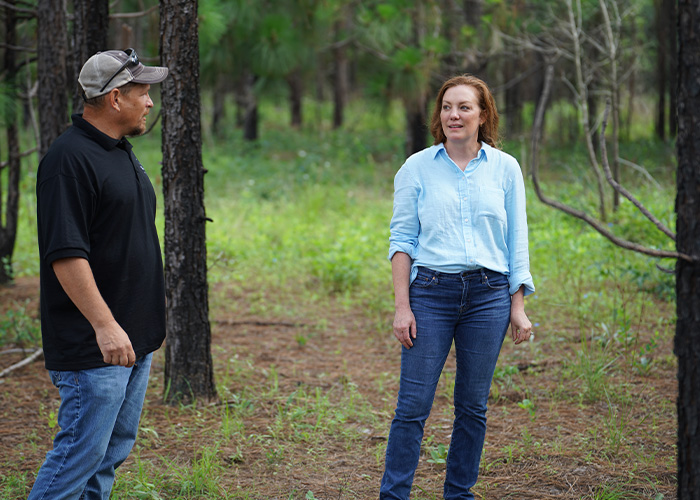
With NRCS assistance, Holly has implemented several conservation practices to restore Pine Island, chief among them is prescribed burns.
“Burns are an important part of forest management in these parts,” NRCS District Conservationist Callie Pratt said. “The indicator species tell us the decisions being made are improving their habitat. We’re seeing regrowth, not dying trees, and the land is opening up because there’s less competition.”
Prescribed burns help manage forest understory and improve habitat for wildlife. This practice has been particularly effective in restoring natural grasses, which are vital for wildlife like turkeys and quail.
Another key practice is invasive species control, specifically Chinese tallow and yaupon holly. Tallow, with its low-hanging small green leaves, quickly spreads after canopy removal.
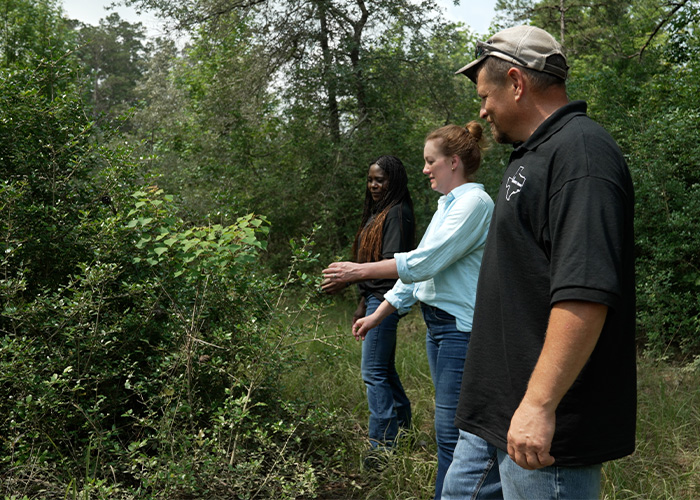
“The second you take out the trees, the sunlight hits the ground and those spread all over, and then none of the hardwood can come up or naturally regenerate,” said Holly.
Yaupon holly, known for its bright berries, spreads rapidly as birds carry the seeds. Regular burns and herbicide treatments help control these invasives, which otherwise become hazardous wildfire fuel.
“Not only does it pose a fire hazard, but it’s not really useful to larger wildlife,” Justin said. “The deer, turkey and quail don’t really use it because it’s so thick.”
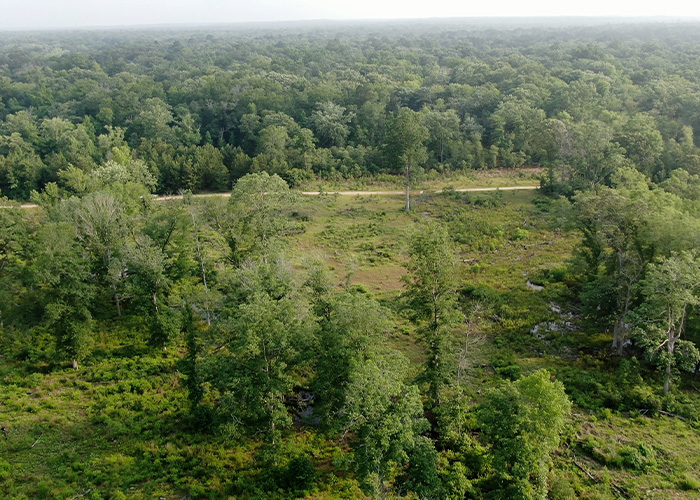
Perhaps most meaningful to Holly is watching wildlife return. The development of open pine savannas with healthy understory vegetation has created excellent habitat.
Bringing Back the Turkeys
One of Holly’s biggest goals has been reintroducing Eastern wild turkeys.
“My father had a love for wild turkeys, and it was very important to him to have them reintroduced to the area,” she said. “Wild turkeys had been hunted out, but with the National Wild Turkey Federation, we got close to 90 turkeys stocked out here.”
Open spaces created by prescribed burns have been essential for their survival. Seeing the turkeys thrive is a fitting tribute to her father, and Holly credits NRCS practices for helping reestablish the population.
For Holly, managing Pine Island isn’t just about sustaining the land, it’s about honoring her family’s history in forestry and inspiring future generations.
Her dedication is a powerful reminder of what can be achieved with passion, perseverance, and the right partnerships. As she continues her partnership with NRCS, Holly hopes her story will inspire others take steps to preserve and enhance their land.
More Information
Visit local farms, ranches, forests, and resource areas through our Fridays on the Farm stories. Meet farmers, producers, and landowners who are working to improve their operations with USDA programs.
USDA offers a variety of risk management, disaster assistance, loan, and conservation programs to help producers weather ups and downs in the market, recover from natural disasters, and invest in improvements to their operations. Learn about additional programs.
For more information about USDA programs and services, contact your local USDA service center.
 Loans and Grants
 Disaster Planning and Assistance
 Conservation
 Ag Business
 Farm Life