


In this Ask the Expert, Falan Goff and Shannon Olive answer questions about Federal crop insurance options available to aquaculture producers.
Falan and Shannon are risk management specialists with USDA’s Risk Management Agency (RMA) and serve on the agency’s Seafood Team.

RMA serves America’s agricultural producers through effective, market-based risk management tools to strengthen the economic stability of agricultural producers and rural communities.
Falan has worked for RMA for five years, focusing on oyster risk management and perennial crop programs. Falan’s connection to aquaculture and coastal communities is deeply rooted in her family history: her great-great-grandmother owned an oyster house in Mobile, Alabama, and her great-grandfather and grandfather were pogie boat fishermen in Apalachicola, Florida. This multigenerational connection to Gulf Coast fisheries gives Falan a personal appreciation for the people, traditions, and industry that sustains aquaculture communities.
Shannon has worked for RMA for 15 years and currently specializes in aquaculture, perennial, and specialty crop programs. Prior to her current role, Shannon worked in the RMA Raleigh Regional Office and helped to develop the Shellfish crop insurance program. She grew up on a farm in eastern North Carolina and understands how vital crop insurance can be when disaster strikes. Shannon wants to ensure all farmers have access to this key tool.
Which crop insurance programs are currently available for aquaculture operations? Where are they available?
RMA currently offers four insurance products to aquaculture producers:
Whole-Farm Revenue Protection (WRFP) is a crop insurance program for all commodities, including aquaculture and seafood, on an operation under one insurance policy and is available nationwide.
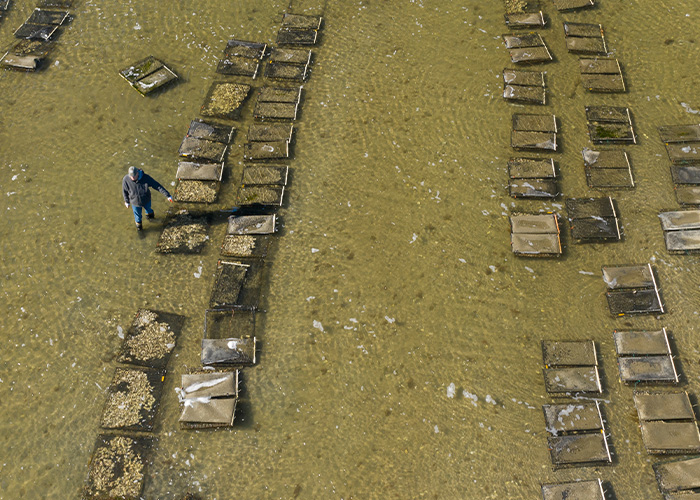
The Shellfish crop insurance program is a yield-based product for containerized oysters commercially produced for the half-shell market. This program provides coverage against qualifying storms (hurricanes and nor’easters), excessive heat, freeze, and low salinity caused by excessive rainfall.
The Shellfish program is available in select counties in Alabama, California, Delaware, Florida, Louisiana, Maine, Maryland, Massachusetts, Mississippi, New Hampshire, New Jersey, New York, North Carolina, Rhode Island, South Carolina, Texas, and Virginia.
Cultivated Clams provides inventory-based stock mortality insurance for clam producers in select counties in Massachusetts, New Jersey, South Carolina, and Virginia. Producers submit inventory records for their insurable clams, and indemnities are paid for insured causes of loss that reduce the inventory value by more than the selected deductible.
Group Risk Plan (GRP) Oysters is available in all nine coastal parishes in Louisiana and provides coverage against widespread loss of wild-caught or seed-raised oyster production in a parish. GRP Oysters uses parish-level landing data as the basis for determining a loss.
How do I purchase coverage?
You will need to contact a crop insurance agent to purchase coverage. RMA’s Agent Locator provides agent and provider information for customers in all 50 states. Keep in mind that crop insurance coverage decisions must be made on or before the annual sales closing date, which varies based on policy, crop, and location.
The sales closing date for Shellfish and Cultivated Clams is Nov. 30 for producers in all eligible locations.
Eligible Louisiana producers interested in GRP Oysters can purchase coverage for the next crop year by April 30.
For WFRP, the sales closing date for late fiscal year filers is Nov. 20. The WFRP sales closing date for producers who are calendar year and early fiscal year filers ranges by county, either Jan. 31, Feb. 28, or March 15.
What else is RMA doing to support aquaculture producers?
RMA recently announced the expansion of the Shellfish crop insurance program to Texas. Additionally, RMA approved a flexibility under the program to allow producers in select Massachusetts counties to add the Winter Removal Option (WRO) to their policies. Both changes are effective beginning with the 2027 crop year.
RMA is committed to increasing the availability and effectiveness of Federal crop insurance as a risk management tool. The RMA Seafood Team has participated in numerous outreach events and is currently working with the industry to expand crop insurance products available to aquaculture producers.
Since her appointment in 2025, RMA Administrator Pat Swanson has prioritized meeting with producers and crop insurance professionals to gather feedback to improve and streamline risk management options for American agriculture.
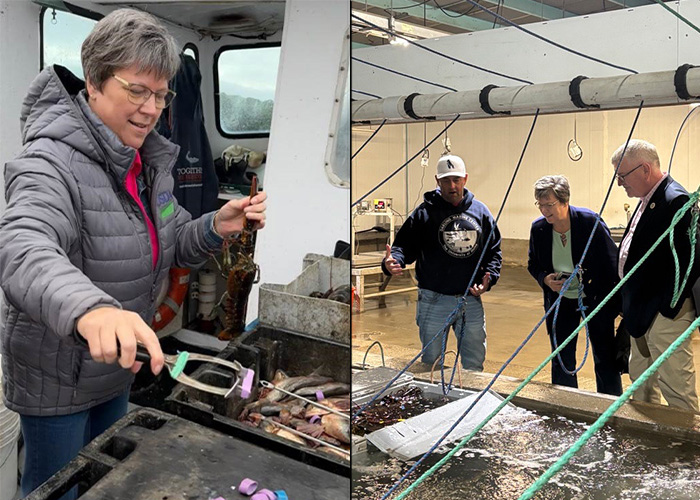
As part of this effort, Administrator Swanson and USDA Farm Production and Conservation Under Secretary Richard Fordyce recently met with associations representing Maine fisheries and lobstermen to gain insight into the industry and the challenges they face.
What other options are available to aquaculture producers?
You may be eligible for programs through USDA’s Farm Service Agency (FSA), including the Noninsured Disaster Assistance Program, Emergency Assistance for Livestock, Honeybees, and Farm-Raised Fish, Farm Storage Facility Loan Program, and farm loans.
USDA’s Natural Resources Conservation Service (NRCS) can provide one-on-one technical advice and financial assistance to help you reach your goals through voluntary, incentive-based conservation programs.
Contact your local USDA Service Center to learn more about available FSA and NRCS programs.
Where can I find more information?
Visit RMA’s Seafood page for more information about available crop insurance programs. Reach out to the RMA Seafood Team at rma.seafood@usda.gov or a crop insurance agent if you have questions about crop insurance for aquaculture operations.
Producers can learn more about crop insurance and the modern farm safety net at rma.usda.gov. To learn about additional USDA resources and initiatives that support aquaculture, visit usda.gov/farming-and-ranching/aquaculture.
Lauren Moore is a public affairs specialist for USDA’s Risk Management Agency.

 Loans and Grants
 Disaster Planning and Assistance
 Conservation
 Ag Business
 Farm Life